

How to Start a 150–250 TPH Quarry Crushing Line with Track-Mounted Jaw & Cone Crushers
Over the past few years, our team has built several 150–250 TPH mobile crushing lines in places like Georgia, Russia, Saudi Arabia, Oman, Indonesia and North Africa. This capacity range is extremely common for new quarries and contractors because it strikes a good balance:
- The investment is manageable
- Output is enough for most concrete plants and road projects
- Track-mounted units don’t require foundations, which keeps civil work close to zero
- The entire line can move with the mining face
Based on what we have seen in real projects—not theory—here is a practical guide from SUHMAN engineers for anyone planning to start a 150–250 TPH mobile crushing line.
1. Start with the Material, Not with the Machine
A lot of customers ask us, “Which model should I buy?” In real quarry work, the material decides the machine—not the other way around.
Before choosing a jaw or cone, make sure you clearly know:
- The largest rock size coming from the face
- Whether the rock is clean or contains clay and fines
- Abrasiveness and hardness (basalt and granite wear liners faster than limestone)
- Moisture conditions and if there is any sticky material
For example, in one basalt quarry in Eastern Europe the raw rock came in at 600–700 mm. Even though the customer only wanted around 200 TPH, we still had to choose a larger
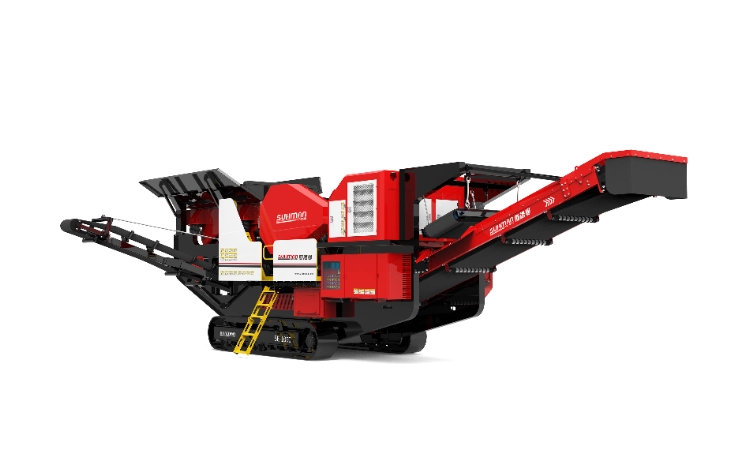
track-mounted mobile jaw crusher
with a big enough feed opening. If the opening is too small and operators need to break boulders manually, production will never reach the target.
2. A Practical Configuration That Works in Most Cases
Every quarry is different, but the most stable setup we’ve used repeatedly in the 150–250 TPH range looks like this:
- Primary: Track-mounted jaw crusher
- Secondary: Track-mounted cone crusher
- Screening: 3-deck vibrating screen
- Output: four standard aggregates (0–5, 5–10, 10–20, 20–40 mm)
This combination is simple, easy to maintain and delivers consistent quality. In one hard-rock site in Russia, this setup ran for a year with only two major liner changes.
The jaw handles the heavy impact work; the cone handles shaping and final sizing. If your market demands more fines (0–5 mm), the cone can be tightened or a third-stage solution can be added later.
In many projects we combine an SE-1060 jaw with an SC-200 cone and a three-deck screen as a compact
mobile crushing & screening plant
for this capacity range.
3. Things Most New Quarry Owners Don’t Consider (But Should)
Feeding Consistency Matters More than Crusher Size
We often see operators load the jaw in “batches”: one big bucket full, then nothing for 20 seconds. This causes the cone to overload and underload repeatedly, which hurts both capacity and liner life.
A steady, even feed to the jaw makes the whole line run smoother. Even if you’re using a simple wheel loader, train your operator to keep material flowing at a stable rate instead of dumping sporadically.
Pre-Screening Can Save Real Money
If your raw material contains a lot of fines or weathered stone, adding a pre-screen or a grizzly before the jaw can save a lot of wear. Removing 0–40 mm before it enters the primary crusher reduces liner consumption and improves throughput.
In one project in the Middle East, the customer reduced jaw wear by roughly 30% simply by installing a grizzly feeder to remove loose fines before crushing.
Don’t Underestimate Stockpile Space
A 200 TPH plant can easily produce 2,000–2,500 tons per 10-hour shift. You need enough room for stockpiles; otherwise loaders will constantly drive across the working area, which slows down loading and increases fuel consumption.
As a rule of thumb, we suggest planning at least 1,000–1,500 m² of open area for four product piles for a 150–250 TPH line.
4. Example: A Real 200 TPH Setup from One of Our Projects
To give you a clearer picture, here is a simplified configuration we delivered to a customer in Eastern Europe.
Material: Basalt
Max feed size: 650 mm
Final products: 0–5, 5–10, 10–20, 20–40 mm
Working hours: 10–12 hours per day
Equipment Used:
- SE-1060 track-mounted jaw crusher
- SC-200 track-mounted cone crusher
- SS-3D three-deck screening unit
- Belt conveyors, over-belt magnet and dust control spray nozzles
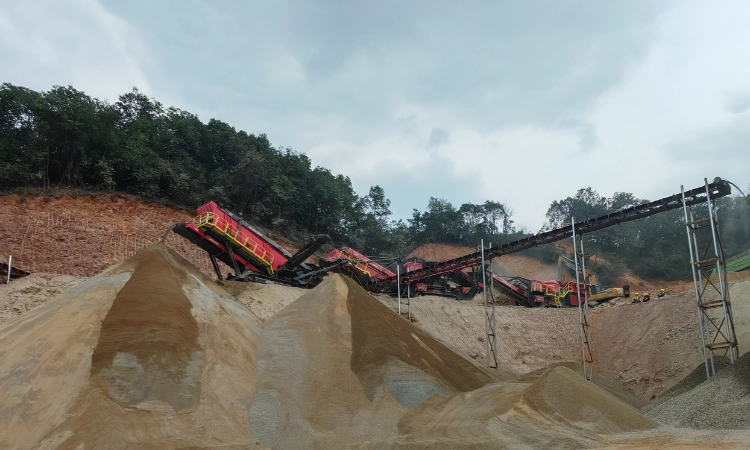
After about one week of adjustment, the output stabilized at 190–210 TPH. Jaw plates lasted around three months, and cone liners lasted about six to eight weeks depending on feed quality and operating style.
Later, when the customer needed higher capacity, they added one more cone unit and upgraded conveyors. The original line did not need a complete redesign, which kept upgrade costs low.
5. Choosing the Right Jaw & Cone Models: Practical Advice
Here is how we usually suggest choosing models for a 150–250 TPH quarry, based on real field experience:
- Jaw Crusher: choose based on the largest rock size, not just the desired TPH. If your max rock is above 550 mm, avoid very small jaw models. Oversized rock will lead to jamming and unsafe manual breaking.
- Cone Crusher: capacity depends heavily on the closed side setting (CSS). Don’t pick a cone that is too small and expect it to produce large amounts of 20–40 mm at high capacity. A correctly sized
track-mounted cone crusher
running at a balanced CSS will be more efficient and give longer liner life. - Screen: for 150–250 TPH, a 3-deck screen is usually ideal. It allows you to produce four clean fractions and to recirculate oversize material efficiently back to the cone.
6. What SUHMAN Usually Provides for This Type of Project
Every quarry is different, so we don’t push a fixed “catalog solution”. For a 150–250 TPH line, our engineering team usually provides:
- A layout drawing based on your land shape and stockpile area
- Recommended jaw and cone model combination, including power requirements
- Expected TPH for each final product size under normal conditions
- Fuel consumption or electric power estimate
- Spare parts and liner consumption plan for the first year
- Transport, installation and commissioning guidelines
- CE-compliant configuration if required for EU markets
Many customers prefer to work with one supplier for the full line, including feeders, conveyors, magnets and dust control. This simplifies communication, ensures all components match each other and makes it easier to manage after-sales service.
7. Planning a 150–250 TPH Line? Here’s What We Need from You
If you are planning a 150–250 TPH quarry crushing line, we can prepare a practical proposal for you. To design the right solution, please send us:
- Type of rock and its hardness
- Largest rock size at the feeding point
- Required capacity (TPH) and daily working hours
- Desired final product sizes and main applications
- Local voltage or diesel/generator preference
- Site photos or a simple sketch of the available area
- Any special requirements (CE, dust control, noise limits, mobility, etc.)
Once we have this information, our engineers will design a suitable track-mounted jaw and cone crushing solution for your quarry, and provide an estimated investment budget, delivery time and recommended spare parts list.
If you are ready to discuss your project, you can contact the SUHMAN team directly and we will get back to you with a customized proposal.