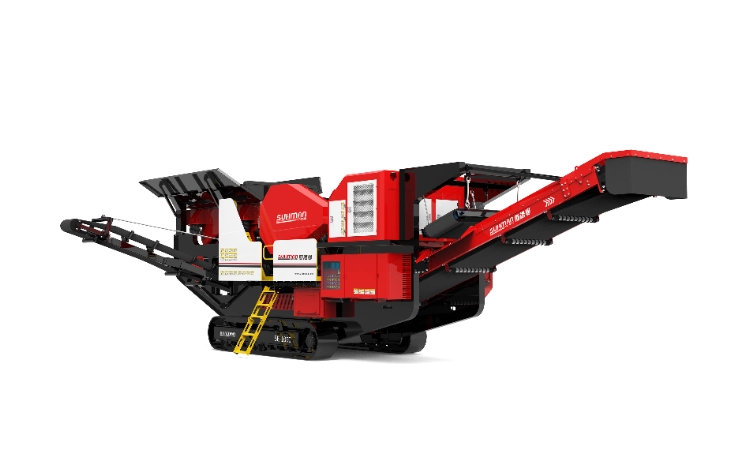



Buying Guide for Tracked Mobile Jaw Crushers: Beyond Feed Opening – These 3 Core Parameters You Must Know
When purchasing a tracked mobile jaw crusher (also known as portable or crawler-mounted jaw crusher), most buyers focus first on the feed opening size (e.g., 1060×700 mm or similar) to ensure it handles their maximum rock/block size. While that’s essential, it’s only the starting point.
In real-world applications—especially for hard rock like granite/basalt, quarries, mining, or C&D recycling in 2026—the following three core parameters often determine long-term profitability, uptime, and total cost per ton (fuel + wear + maintenance). Ignoring them can lead to underperformance, high operating costs, or frequent breakdowns.
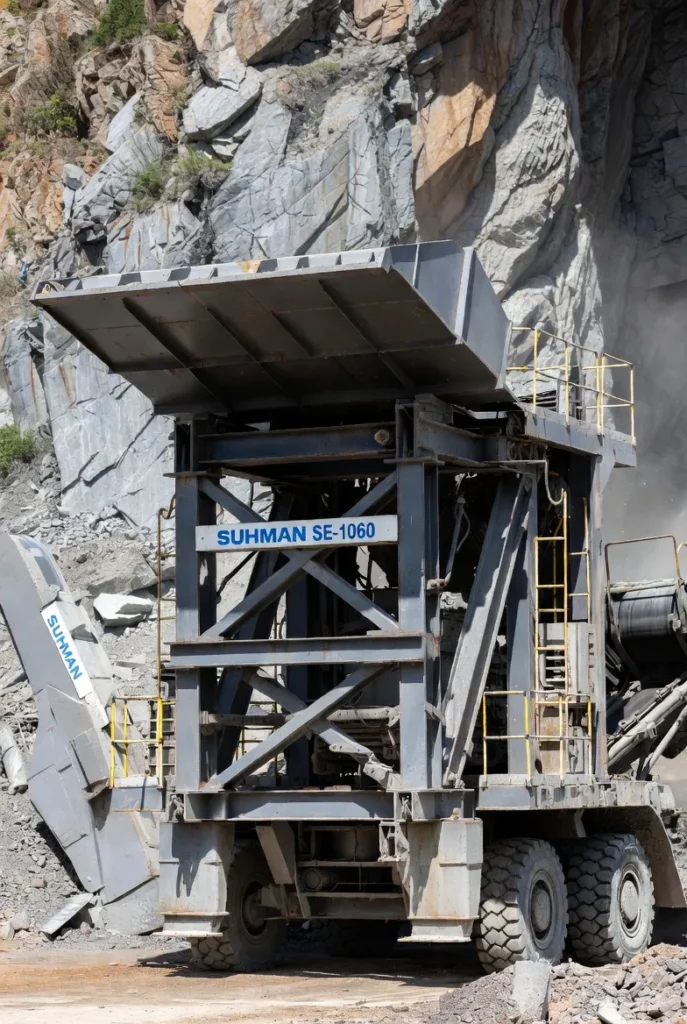
1. Rated Capacity (Throughput in TPH) & Actual Real-World Output
- Why it’s critical — Rated capacity (e.g., 200-250 t/h for mid-size models like SE-1060) is theoretical, based on ideal conditions (clean, dry, medium-hard material like limestone). In abrasive hard rock (granite/quartzite), real output can drop 20-40% due to higher wear, slower feeding, or material bridging.
- Key checks:
- Compare rated vs. field-tested capacity for your material type.
- Look for pre-screen/grizzly feeder integration — it removes fines early, boosting actual throughput by 15-30% and reducing jaw liner wear dramatically.
- Factor in jaw speed (rpm) and eccentric throw — higher speed + optimized throw improves reduction ratio and output in tough rock.
- Pro tip — Ask for real project data: “What TPH did you achieve on granite with similar hardness?” Models with integrated pre-screening and high-speed jaws (e.g., 270-300 rpm) excel in hard/abrasive applications.
2. Engine Power & Drive System (Diesel/Hybrid/Electric, kW/HP)
- Why it’s critical — Insufficient power leads to stalling under load, reduced TPH, higher fuel burn per ton, and premature wear. In 2026, with rising fuel prices and emissions regulations, power source efficiency directly impacts your operating cost (often 2.5-4 RMB/ton in fuel/electricity).
- Key checks:
- Engine rating — Aim for 200-400 kW (268-536 hp) for mid-large models (150-350 TPH). Underpowered engines (e.g., <200 kW on a 250 TPH machine) struggle on hard rock.
- Dual-power/hybrid options — Diesel for remote sites + electric/generator for grid access saves ~30% on energy costs. Fully electric models are gaining popularity for low-noise/zero-emission urban recycling.
- Fuel efficiency — Check real consumption (e.g., liters/ton or kWh/ton) from similar projects.
- Pro tip — For China-based operations (Jiangxi/Fujian granite mines), dual-power tracked jaws reduce costs significantly in grid-available sites while maintaining mobility.
3. Closed Side Setting (CSS) Range & Adjustment System
- Why it’s critical — CSS (the gap at the bottom of the jaws when closed) controls final product size (e.g., 80-250 mm discharge). A wide, easy-to-adjust range gives flexibility for different specs (road base, ballast, or secondary feed).
- Key checks:
- Adjustment type — Hydraulic wedge/system is faster/safer than manual shims (especially on mobile units where frequent changes occur).
- Range — Wide range (e.g., 80-250 mm) allows one machine to handle coarse primary crushing or finer output without swapping units.
- Liner life impact — Tighter CSS on abrasive material accelerates wear; choose models with premium manganese/alloy liners and optimized cavity profiles.
- Pro tip — Hydraulic CSS + wear monitoring sensors (some 2026 models) help maintain consistent gradation and predict liner changes, reducing downtime.
Quick Comparison Table: What to Prioritize for Your Needs
| Parameter | Why It Matters Most | Ideal for Hard Rock/Quarry (e.g., Granite) | Ideal for Recycling/C&D | Typical Check Value (Mid-Size Model) |
|---|---|---|---|---|
| Rated Capacity | Determines real profitability per hour | 200-350 TPH with pre-screen | 150-250 TPH, focus on fines bypass | 200-250 t/h (actual 180-220 on hard rock) |
| Engine Power/Drive | Prevents stalling, controls fuel cost/ton | Dual-power, 250-350 kW | Hybrid/electric for low emissions | 250-400 kW, <3 L/ton fuel |
| CSS Range & Adjustment | Flexibility + product quality control | Wide range + hydraulic | Hydraulic for quick changes | 80-250 mm, hydraulic system |
Final Advice for Buyers in 2026
Don’t just compare brochures—request site-specific demos, real TPH data on your material, and total cost-per-ton calculations (including liners, fuel, and maintenance). For abrasive hard rock like Chinese granite, prioritize pre-screening, high liner life, and dual-power to achieve competitive costs (~8-10 RMB/ton).
Need a customized recommendation for your feed size, material, or target TPH? Share your project details (e.g., granite in Jiangxi/Fujian), and our team can suggest optimal configurations like the SUHMAN SE-1060 series.
Explore more:
Contact us for a free configuration and cost estimate!