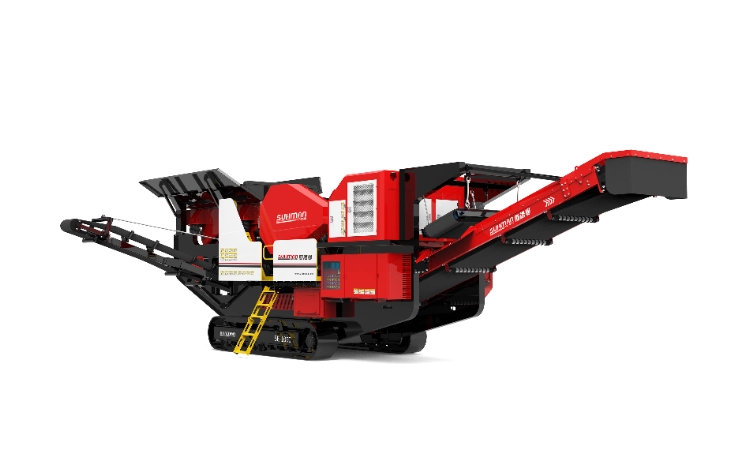



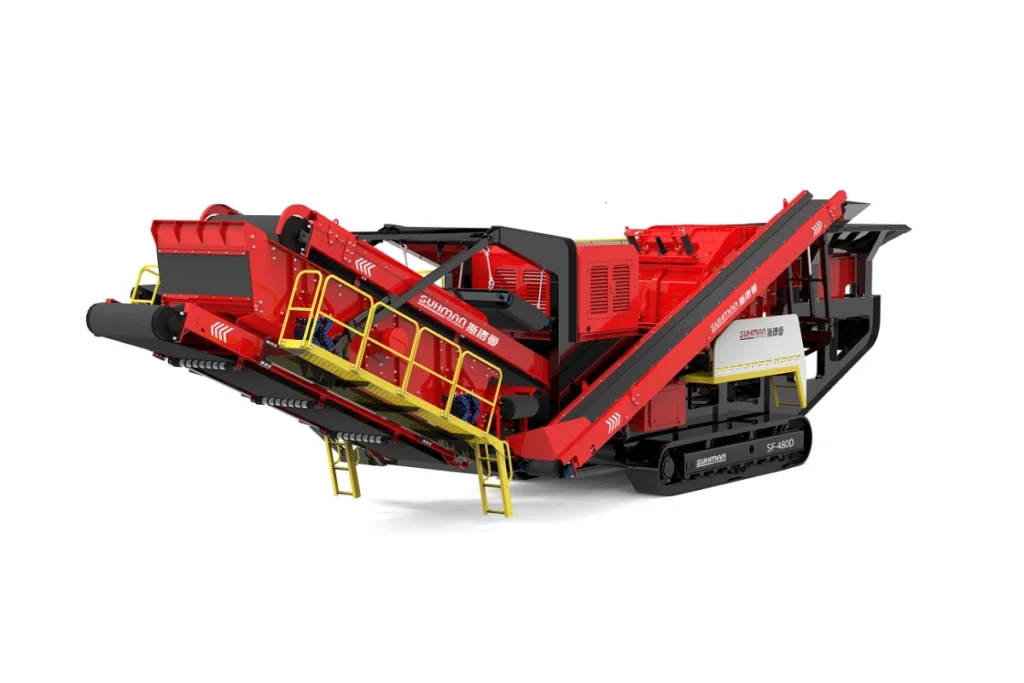
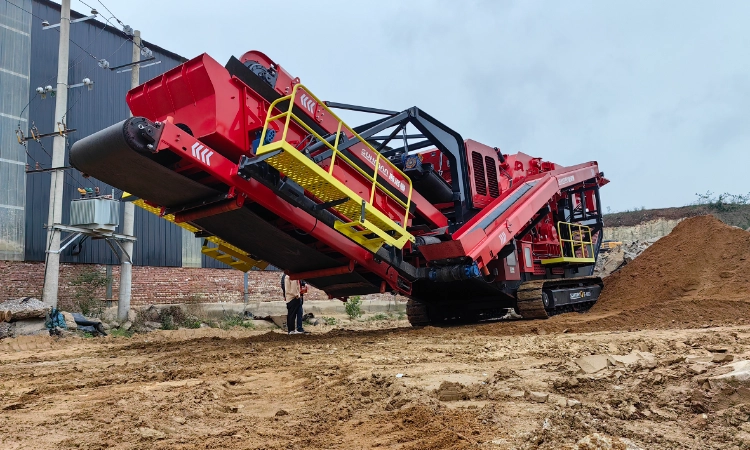
Crawler-type mobile crushing station integrates feeding, crushing, screening, iron removal, conveying, and other processes into one piece of equipment. It comprises various systems including the receiving system, feeding system, crushing system, power system, conveying system, walking system, and hydraulic system. The power system, often considered the “heart” of the crawler-type mobile crushing station, primarily utilizes five drive methods: direct drive + hydraulic drive, direct drive + electric drive, full hydraulic drive, grid power drive, and diesel-electric drive.
_WH_750x450px.webp)
1. Direct Drive + Hydraulic Drive
Powered by a diesel engine, this drive mode splits power through a transfer box into two outputs. The main output is connected to a clutch or hydraulic coupler to drive the crushing host, while the other output drives the hydraulic pump set to perform walking, feeding, conveying, and auxiliary folding functions. Direct drive + hydraulic drive is currently the mainstream driving method domestically and internationally, adopted by manufacturers such as XCMG, Metso, Sandvik, Kleemann, and Keestrack. This drive method features a compact layout and high transmission efficiency. However, the higher operational costs compared to grid power drive limit its widespread adoption.
2. Direct Drive + Electric Drive
This method, powered by a diesel engine, divides output through a transfer box into three outputs: the primary output connects to a clutch or hydraulic coupler driving the crushing host, another output drives a pump set for track walking and other hydraulic mechanisms, and a third output drives a generator for feeding and conveying via electric motors. Manufacturers like RM and Kleemann widely adopt this method. It provides easier maintenance compared to direct drive + hydraulic drive but incurs significantly higher production costs due to larger pump sizes and diesel engine fuel expenses, demanding higher overall equipment layout requirements.
3. Full Hydraulic Drive
Powered by a diesel engine, full hydraulic drive utilizes a series pump set to supply pressure oil to the hydraulic system. The crushing host operates via a dedicated variable piston pump, while other components are managed by additional pump and valve groups. Metso has extensively adopted this method. It is characterized by lower production costs, simpler structure layout, and easier control. However, its application is usually restricted to smaller mobile crushers due to large startup torque and high operational speeds. Additionally, high-performance hydraulic components, often imported, significantly increase operating costs.
4. Grid Power Drive
The crawler-type mobile crushing station using grid power drives the walking system through a diesel engine-driven hydraulic pump and walking motor, while all other functions rely on grid electricity. Its major advantage is lower operational cost and spacious structural layout facilitating maintenance. This method is primarily utilized by domestic manufacturers like Nanchang Mining Machinery and semi-mobile crushing stations. However, its application scope is limited due to dependence on power cables in mining and construction waste processing sites.
5. Diesel-Electric Drive
This mode utilizes either grid electricity or diesel generator sets as power sources. Walking systems are driven by electric motors combined with hydraulic pump sets, while other functions are powered electrically. Comparable to plug-in hybrid vehicles, this method is the future direction for crawler-type mobile crushing stations, offering cost-effective grid connectivity for large projects and flexible diesel operation for smaller tasks. Kleemann in Germany extensively employs this method. Nevertheless, it faces challenges due to high manufacturing costs, complex equipment structures, limited spatial layout, and complicated maintenance requirements.