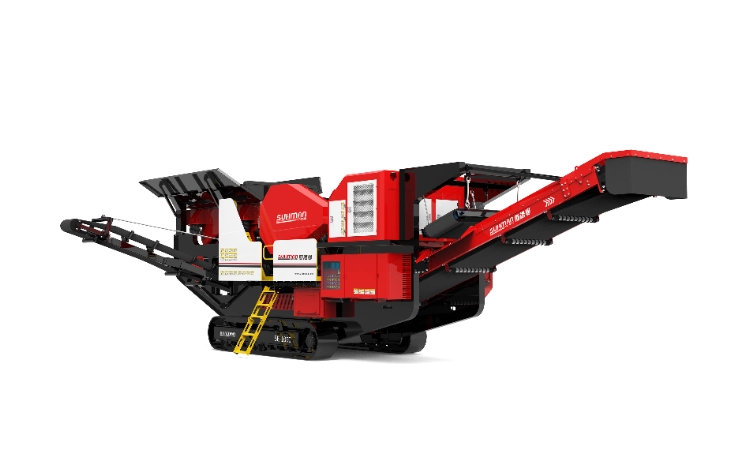



Comprehensive Guide to Hammer Crushers: Structure, Features, Working Principle, and Applications
Structure of a Hammer Crusher
Hammer crushers are composed of several essential components including the frame, rotor, screen, and hammers. The electric motor drives the rotor via a V-belt, initiating the crushing process by the impact force of rapidly rotating hammers.
- Frame: Divided into an upper cover and lower base, both lined with protective plates to reduce internal wear. The frame includes four access doors: two on the upper section for adjusting the crushing plate and clearing unbreakable materials, and two on the lower section for inspecting and cleaning the screen bars.
- Rotor: Composed of a rotor shaft, discs, hammer shafts, and hammers. Discs are separated by spacers and mounted on the rotor shaft. Hammers hang from the hammer shafts and rotate as the rotor spins.
- Screen Assembly: Located in slots along the inner walls of the lower housing to control particle size.
Installation Guidelines
- The manufacturer provides a foundation layout showing the recommended position of the crusher and motor; actual installation should consider site-specific factors.
- Install the unit on a reinforced concrete foundation with attention to discharge direction.
- To minimize operational vibrations, place hardwood or damping pads between the machine and foundation.
- Align the motor and rotor shaft to avoid excessive wear on bearings.
- Though typically configured with the drive system on the right, this can be adjusted as needed.
Key Features of a Hammer Crusher
- High Wear Resistance: Hammers are cast using advanced techniques for superior durability and impact resistance.
- Adjustable Output: Particle size can be customized to user requirements.
- Dust Control: Sealed housing design effectively minimizes dust and leakage.
- Modern Design: Compact structure, minimal wear parts, and easy maintenance make it an ideal next-gen crusher.
- Aesthetic and Functional: Sleek appearance and high usability.
Working Principle
Hammer crushers operate primarily on the principle of impact energy. When activated, the motor drives the rotor at high speed, and material fed into the chamber is struck by the hammers. The kinetic energy causes the material to break upon impact, shear, or tear. Gravity then helps guide the material toward the internal baffles and screen bars. Oversized pieces remain in the chamber until sufficiently crushed to pass through the screen.
Types of Hammer Crushers
- By Stage: Single-stage hammer crusher, High-efficiency hammer crusher, Sand maker.
- By Axis Type: Vertical shaft hammer crusher, Reversible hammer crusher, Ring hammer crusher.
- By Rotor:
- Single rotor
- Double rotor
- By Hammer Layout:
- Single row (same rotational plane)
- Multiple row (distributed across planes)
Ring Hammer Crushers are specialized variants where the hammers are replaced with rings. These are especially suited for crushing coal in power plants but are also used for gypsum, salts, and other medium-hard materials. They combine impact and rolling to produce finer materials.
Applications
Hammer crushers are suitable for breaking down medium-hard and brittle materials such as:
- Coal
- Salt
- Chalk
- Gypsum
- Bricks
- Limestone
- Asbestos-cement waste for fiber recovery
They are also used in:
- Crushing production lines
- Sand-making lines
- Mineral processing (as alternatives to cone crushers)
Advantages & Disadvantages
Advantages:
- High crushing ratio (10–25, up to 50 in some cases)
- High productivity
- Uniform output
- Low over-crushing rate
- Energy-efficient
- Lightweight, simple structure
- Easy to operate and maintain
Disadvantages:
- Fast wear of hammers and screen bars, especially with hard materials
- Downtime required for maintenance and balancing
- Vulnerable to clogging when handling wet or sticky materials (recommended moisture <10%)
Note: Ring hammer crushers are best for materials with compressive strength <100 MPa and moisture <15%.
Operational Notes
Pre-Start Checklist:
- Check lubrication levels in main and auxiliary bearings
- Inspect all fasteners and structural joints
- Ensure no obstructions are inside the machine
- Examine the drive belt and motor wiring
- Confirm that all safety guards are intact and secure
Only after all systems are verified should the machine be powered on sequentially.
During Operation:
- Do not restart the machine if it stops unexpectedly without clearing the cause and removing accumulated materials
- Monitor sound for irregularities (e.g., hammer-screen collisions)
- Never inspect while in motion
- Regularly inspect hammers, liners, and screens for wear
Maintenance Tips
Proper maintenance is key to maximizing the machine’s lifespan:
- Daily Tasks: Cleaning, bolt tightening, ensuring lubrication
- Planned Inspections: Periodic checkups and part replacements
- Lubrication: Use grease over oil in dusty environments to improve sealing and reduce contamination
Operational Best Practices:
- Apply the “Three Goods”: Good use, good management, good maintenance
- Follow the “Four Knows”: Know how to operate, maintain, inspect, and troubleshoot
- Maintain a “Four Zeros” environment: No dust buildup, no clutter, no oil leaks, no loose parts