


01 Advantages and Infrastructure Requirements
Compared to diesel-powered equipment, fully electric mobile crushing and screening units are significantly more environmentally friendly, as they produce zero CO₂ emissions at the construction site. Moreover, from a long-term perspective, electric-powered models also offer greater operational cost-efficiency.
Today, as market demand increases for sustainable, low-emission solutions, our customers who adopt electric-driven mobile equipment are positioning themselves as future-ready suppliers in high demand.
Although initial capital investment is higher, the fuel savings can quickly offset these costs. According to a case study from the German market, the investment can be amortized in approximately six years. If the equipment is powered by the customer’s own photovoltaic (PV) system, the payback period can be reduced to around four years.
02 Prerequisites for Electric-Powered Construction
In the case study used for cost estimation, the mobile production line included:
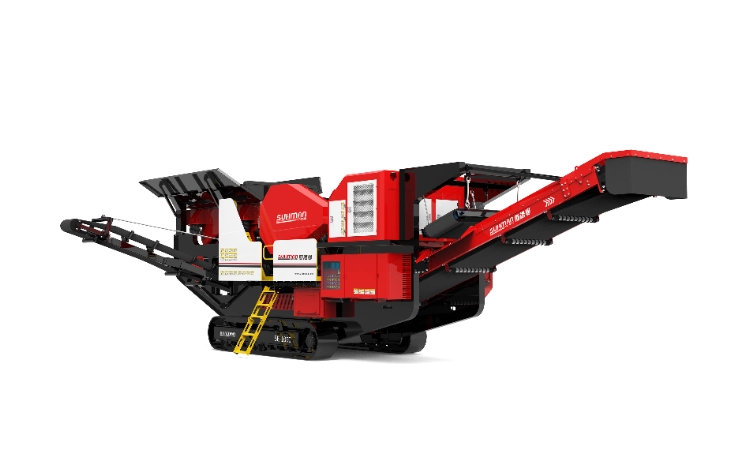
- Mobile Crushing Plant SE-1060 – Mobile jaw crusher
- Mobile Crushing Plant SY-HP300 – Mobile cone crusher for secondary crushing
- Mobile Screening Plant SS-7018 – Downstream mobile screening unit
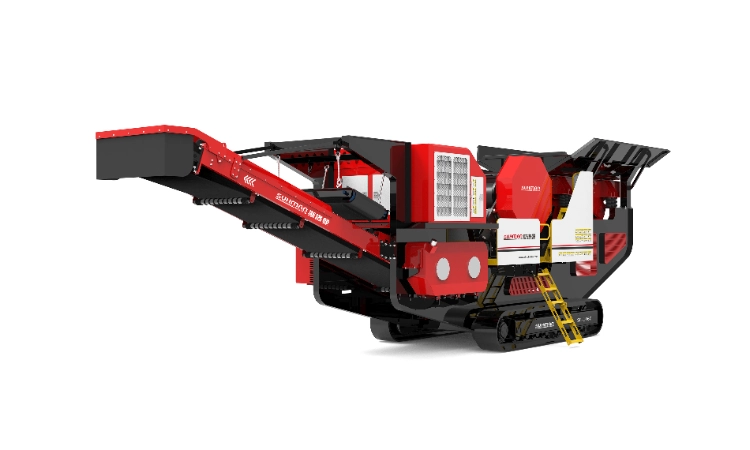
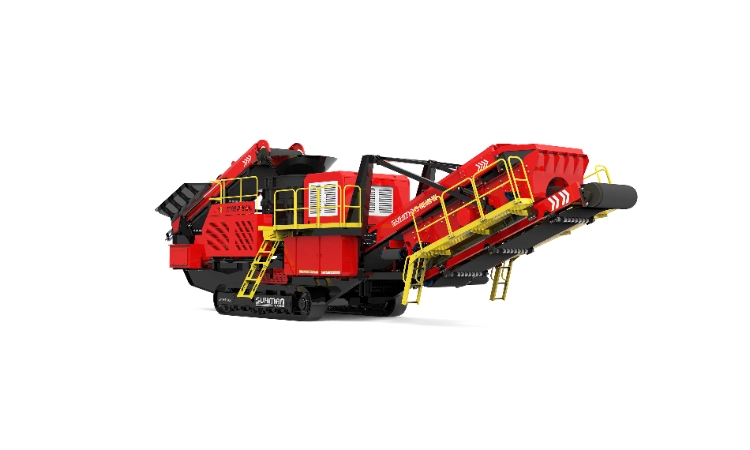
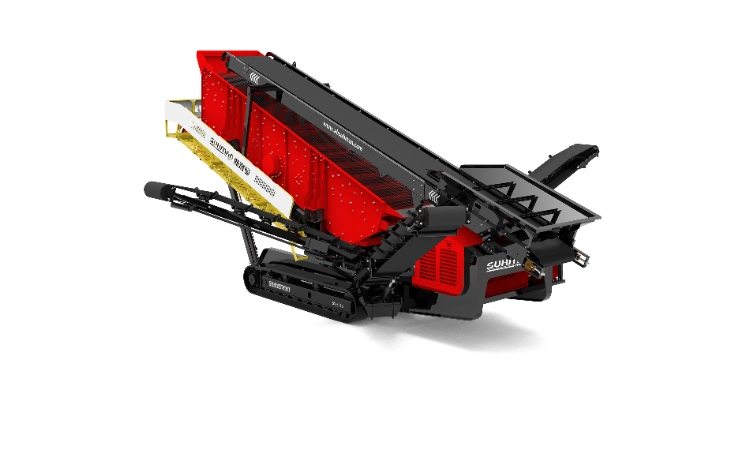
This setup consumes approximately 77 liters of diesel per operating hour. In comparison, the electric-powered version consumes around 302 kW of electricity per hour, with a peak power requirement of 542 kW.
Mr. Wu, Head of Product Management at SUHMAN, explains:
“Energy must first be supplied by proper infrastructure—ideally generated from renewable sources. A sustainable, fast, and economical solution is to power the equipment through an in-house photovoltaic system.”
Properly designing the infrastructure in advance is crucial for efficient power use. Abigail, a project manager from an international corporation, notes:
“First, determine the actual energy requirements of the mobile units as well as the demand of all other electrical equipment on-site. What is the company’s total power consumption? Additionally, analyze the load distribution: When are the peak and off-peak periods? These load profiles can be obtained from the energy provider or grid operator.”
Many companies already have transformers installed on-site, which allows voltage to be adjusted as needed. For example, low voltage can be supplied to the mobile crushing and screening units. Once the required power is calculated, the size and capacity of the existing transformer must be reviewed. Is it sufficient to deliver the necessary power? The nameplate of the transformer will show the available total output.
Interlocked SUHMAN Systems with External Power Supply
Another crucial factor is the positioning of the main power distribution unit on-site, as well as the operational location of the mobile equipment. Good planning is key to high-efficiency operation. For instance, if the mobile units are far from the transformer, it’s often more efficient to transmit power at medium voltage to the area near the equipment, instead of converting it to low voltage at the substation.
This approach allows the use of smaller cross-section cables, which are easier to install and more cost-effective. Then, a second transformer near the equipment can step down the voltage from medium to low, supplying power to the crushing or screening machines. The goal is to develop a tailor-made power supply concept suited to the specific site environment.
03 Fast Amortization of Investment
With a solid infrastructure in place, the initial investment can be amortized within approximately six years—or even sooner—depending on the energy concept. From the moment operations begin, electric-powered mobile units can help reduce construction costs year after year.
Here’s a comparison summary between diesel-powered and electric-powered systems:
Diesel-powered machines require no upfront infrastructure investment beyond fuel. However, diesel costs vary significantly depending on the country or region. Thus, savings from switching to electric depend on the difference between fuel and electricity prices.
Electric systems, on the other hand, involve higher upfront costs due to additional infrastructure, such as transformers and cables (which vary based on length). However, all-electric equipment pays off over the medium term—especially with careful planning. What may initially seem like a one-time investment often turns into a long-term economic advantage.
In many cases, stricter environmental regulations are setting higher standards for construction sites. Electric drive systems provide a decisive competitive edge. For example, when local governments require zero-emission construction in city centers, the use of in-house photovoltaic systems can make electric drive not only an environmentally friendly solution but also a highly economical one.
Abigail adds:
“Electric drive powered by your own PV system becomes a sustainable and cost-saving model in just a few years. It brings considerable financial benefits to construction firms while also demonstrating their commitment to sustainability.”
Even in remote areas with limited grid access, environmentally responsible operation is still possible. SUHMAN’s electric-driven equipment can also run on renewable HVO bio-diesel fuel, offering a flexible hybrid solution.
For more information about SUHMAN’s mobile crushing and screening products and solutions, please contact your local SUHMAN distributor in China, or arrange a site visit with SUHMAN’s product experts for tailored professional advice.