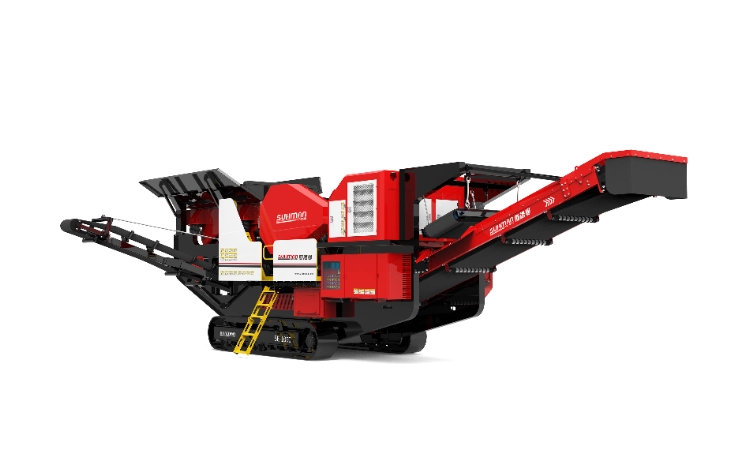



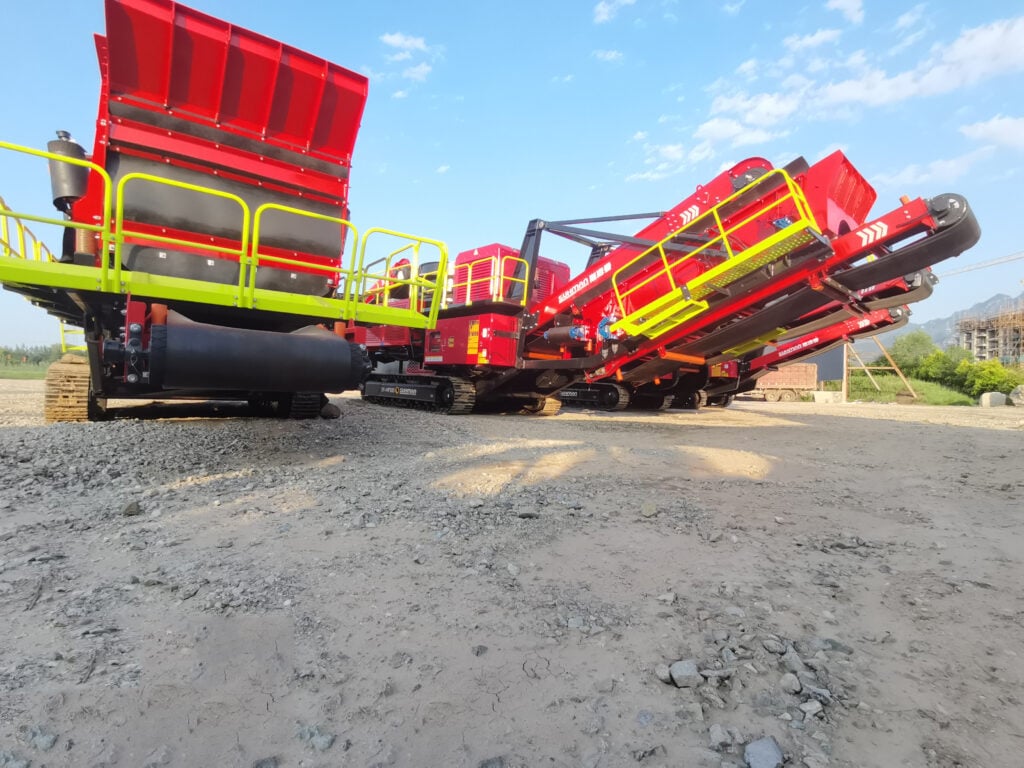
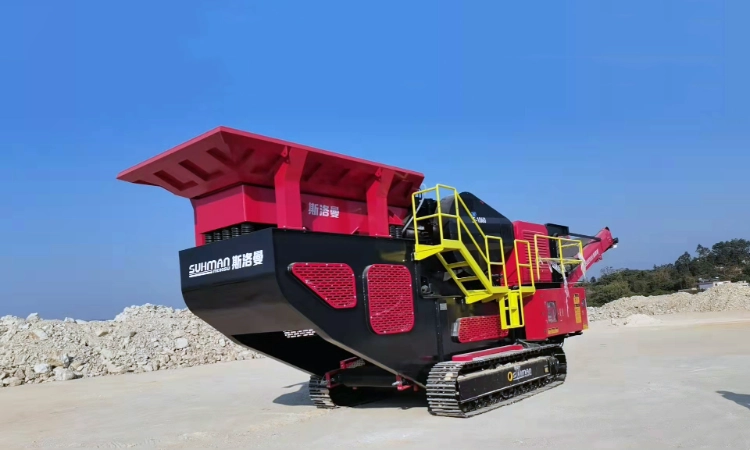
Tracked mobile jaw crushers are commonly utilized in primary crushing operations across industries such as mining, metallurgy, construction materials, highways, railways, water conservancy, and chemical engineering for crushing various ores and large-sized materials. During operation, several common issues might arise. How can we identify and solve these issues to ensure the smooth operation of jaw crushers?

1. Material Return Issue
Material return occurs when the material is pushed back through the feeding inlet rather than being crushed between the movable and fixed jaw plates. This not only reduces production efficiency but also poses safety hazards.
Causes of Material Return:
- Structural Deficiencies:
Newly manufactured parts of tracked jaw crushers may not meet the specified dimensions (e.g., jaw plate length, thickness, toggle plate length and angle, and frame cavity dimensions), resulting in substandard products. Long-term use can enlarge the angle between jaw plates beyond twice the friction angle, reducing friction and causing materials to be forced upwards and out of the feed inlet. - Imbalanced Forces on Materials:
Materials in the crushing cavity may experience uneven vertical forces, increasing the risk of material return. - Excessively Wide Discharge Opening:
A larger discharge opening in the same model of crusher can increase the likelihood of material return. Severe jaw plate wear also contributes to this issue. - Significant Size Variations in Feed Materials:
Large differences in the sizes of materials to be crushed can cause material return.
Solutions for Material Return:
- Select an appropriate crusher model according to the material characteristics.
- Replace or repair jaw plates promptly when wear occurs.
- Pre-screen materials with significant size variation, and perform initial coarse crushing followed by fine crushing.
- Insert wedge-shaped pads at the joint surfaces of the movable jaw and jaw plate to reduce the angle between plates, ensuring it remains below twice the friction angle.
- Weld protective plates above the feed inlet to protect operators from flying materials.
Safety Note:
Operators must exercise caution when material return issues occur. Maintenance personnel should promptly identify the cause and implement corrective actions to avoid production delays.
2. Low Production Capacity
Tracked mobile jaw crushers often function as primary crushers, directly influencing the overall production capacity of the entire production line. Users frequently inquire about reduced production capacities.
Reasons for Low Production Capacity:
- Unsuitable Material Hardness:
When material hardness or toughness exceeds the manufacturer’s specifications, consider using an appropriate crusher or adding additional crushing equipment. - Incorrect Motor Wiring:
If the motor is wired incorrectly, causing reverse rotation or incorrect star-delta connections, promptly adjust the motor wiring. - Insufficient Discharge Opening:
Ensure the discharge opening meets the manufacturer’s specified limits. Adjust to nominal settings and add fine crushing equipment if necessary. - Jaw Plate Misalignment:
Misaligned jaw plates resulting in teeth-to-teeth contact require immediate inspection and realignment or replacement to ensure correct positioning and prevent further displacement. - Low Voltage at Work Site:
If the crusher’s production is compromised due to low voltage, increase the site voltage to accommodate the heavy-load requirements. - Bearing Outer Ring Rotation:
Excessive wear between the movable jaw and bearings, causing relative rotation of the bearing outer ring, necessitates bearing or jaw replacement.
Addressing these issues promptly and systematically ensures efficient and safe operation of tracked mobile jaw crushers, maximizing their lifespan and productivity.