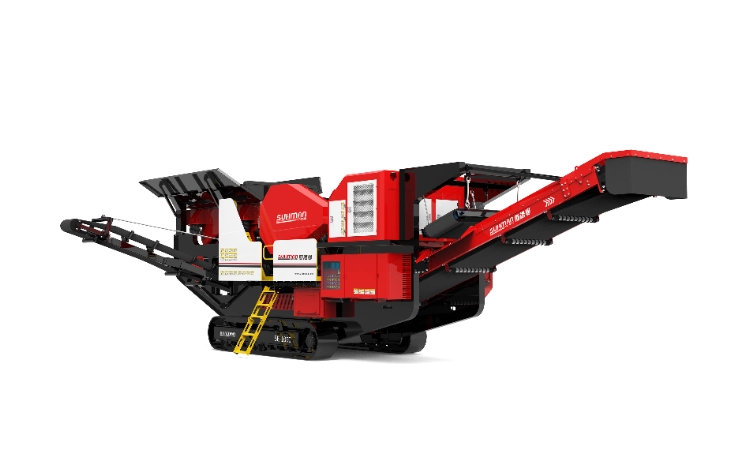



A tire-type mobile crushing station is a mobile equipment that integrates crushing, screening, and conveying functions. It is widely used in mining, construction waste processing, road construction, and other fields. It achieves flexible mobility through tires and can be quickly transferred between different construction sites. The equipment mainly consists of a crusher, screening machine, conveyor belt, and hydraulic system, featuring a compact structure, easy operation, large crushing ratio, and high production efficiency.
Tire-Type Mobile Crushing Station
1. How flexible is the steering of the tire-type mobile crushing station?
- Steering System: Many tire-type mobile crushing stations use a hydraulic steering system, which provides smoother and more accurate steering control. Some simpler models may use a mechanical steering system, which is relatively simple to operate but has slightly lower steering precision.
- Turning Radius: The turning radius of the tire-type mobile crushing station is small, allowing it to maneuver flexibly in tight spaces, making it suitable for urban roads and construction sites. The specific turning radius depends on the equipment’s size and design, generally ranging from a few meters to over ten meters.
- Tire Types: Suitable for various ground conditions, including soil, gravel, and asphalt roads. Suitable for highways and urban roads, providing better speed and fuel economy.
- Cab Design: The cab is usually designed to be rotatable, allowing the operator to better observe the surrounding environment and improve safety. Some models are also equipped with electronic monitoring systems to help operators better control the equipment’s steering and movement.
2. How to select and replace the screen in a tire-type mobile crushing station?
- Screen Selection:
- Screen Types:
- Bar screens are suitable for coarse and medium crushing, ideal for handling larger particles.
- Square screens are suitable for medium and fine crushing, ideal for handling medium-sized particles.
- Circular screens are suitable for fine crushing, ideal for handling small particles.
- Screen Aperture Size: Select the appropriate screen aperture size based on the required output particle size. Common screen aperture sizes range from a few millimeters to tens of millimeters. When selecting the aperture size, consider the material properties and the intended use of the product.
- Screen Material:
- High manganese steel has strong wear resistance, suitable for hard materials.
- Stainless steel has good corrosion resistance, suitable for wet and corrosive materials.
- Carbon steel has a lower cost, suitable for general materials.
- Screen Layers:
- Single-layer screens are suitable for screening a single particle size.
- Multi-layer screens are suitable for grading and screening multiple particle sizes.
- Screen Replacement:
- Turn off the power to ensure the tire-type mobile crushing station is completely stopped.
- Remove the relevant safety guards to ensure operational space.
- Remove the Old Screen:
- Open the crusher’s access door.
- Use special tools to remove the bolts securing the screen.
- Carefully remove the old screen, being careful not to damage other components.
- Check the screen mounting surface for damage or wear.
- Clean the mounting surface to ensure it is free of debris and dust.
- Align the new screen with the mounting surface, ensuring it is positioned correctly.
- Secure the new screen with bolts, tightening to the specified torque value.
- Check if the screen is securely installed, ensuring there is no looseness.
- Close the access door and reinstall the safety guards.
- Turn on the power and perform a no-load run to check for any abnormal sounds or vibrations.
- Gradually load the machine and observe the operation of the tire-type mobile crushing station to ensure everything is normal.
If you would like to know more about tire-type mobile crushing station equipment, please feel free to contact our online customer service. We will promptly answer your questions
1. Advanced Features
- Smart Technology: Modern tire-type mobile crushing stations often include intelligent features like touchscreen controls and remote diagnostics, enabling operators to optimize performance and detect issues early.
- Dust Control: Some models come with built-in dust suppression systems, such as water misters or vacuum collectors, to reduce airborne particles and improve air quality on-site.
- Example: A model like the Metso Lokotrack LT106 features a fuel-efficient engine and an optional noise reduction package, enhancing both performance and operator comfort.
2. Practical Applications
- Mining Operations: These stations can process raw materials like coal, iron ore, or limestone directly at the mining site, reducing transportation costs and time. For instance, they might crush ore into manageable sizes for further processing.
- Construction Waste Management: In urban redevelopment projects, they recycle concrete and brick rubble into usable aggregates, supporting sustainable construction practices.
- Road Projects: They produce graded materials for road bases on-site, such as when building a new highway using locally sourced gravel, ensuring quality and reducing logistics.
3. Maintenance Tips
- Tire Care: Regularly check tire pressure and tread wear to ensure safe mobility, especially on uneven terrain. Replace worn tires promptly to avoid delays.
- Hydraulic System: Monitor hydraulic fluid levels and look for leaks, as the system is critical for steering and crusher operation. Schedule routine servicing to maintain efficiency.
- Screen Upkeep: Store spare screens to swap them out quickly during replacements, and use a torque wrench to ensure bolts are tightened correctly, preventing vibrations or damage.
4. Environmental and Economic Benefits
- Eco-Friendly Options: Hybrid or electric-powered models lower carbon emissions and fuel costs, making them ideal for environmentally conscious projects.
- Noise Management: Some stations feature soundproofing technology, allowing operation in residential areas without disturbing communities.
- Waste Reduction: By recycling construction debris on-site, these machines decrease landfill use and the demand for new raw materials, promoting a circular economy.