


Construction Waste and Its Treatment Solutions
1. Definition of Construction Waste
In general, construction waste refers to the discarded materials produced during the construction, renovation, expansion, and demolition of structures. Specifically, it includes solid wastes generated during building construction, maintenance, and demolition processes—mainly waste concrete blocks, waste asphalt concrete, scattered mortar, concrete debris, and brick fragments.
2. Classification by Source
Construction waste can be categorized into five main types based on its source:
- Earth excavation waste
- Road excavation waste
- Waste from demolition of old buildings
- Waste from building construction
- Waste from building material production
Among these, waste from building demolition and construction activities accounts for the majority. Although the composition ratio varies depending on the structure type, the general components remain similar—mainly soil, slag, scattered mortar and concrete, chiseled bricks and concrete fragments, cut-off reinforced concrete pile heads, metals, bamboo and wood materials, decoration waste, packaging materials, and other residues.
3. Characteristics of Construction Waste
Most construction waste consists of solid materials such as soil, stone, concrete blocks, brick fragments, wood, metal, pipes, and electrical components. Over 90% of it is made up of non-polluting inorganic materials (soil, stone, concrete, brick), which are acid-resistant, alkali-resistant, water-resistant, and chemically and physically stable.
These properties make treated construction waste a valuable recycled building material.
The remaining portion—metals, bamboo, wood, plastics, glass, and packaging—may contain pollutants but can be sorted and recycled. Among urban waste, construction waste is considered one of the cleanest types. Properly utilized, it causes no secondary pollution.
However, due to a lack of waste sorting at construction sites and the mixing of household waste, construction waste has become more polluting and harder to process.
Construction Waste Treatment Solutions
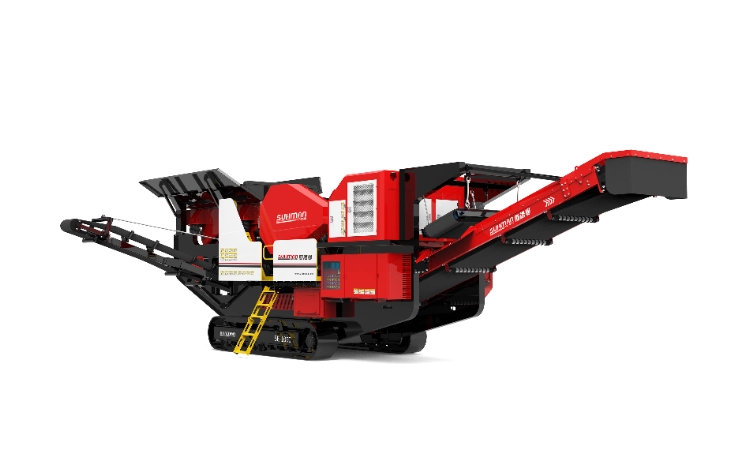
1. Mobile Construction Waste Processing Line
This solution uses mobile crushing and screening equipment specifically designed for construction waste. It significantly expands the scope of coarse and fine crushing operations.
Its design philosophy focuses on eliminating barriers related to site constraints, environmental impact, and complex foundations, offering customers a flexible, efficient, and low-cost operation.
Following the principle of “processing materials close to their source,” it provides an optimized approach for on-site recycling and utilization.
2. Stationary Construction Waste Processing Line
This solution uses a stationary crusher as the main machine and integrates feeding, crushing, iron removal, screening, conveying, dust suppression, and lightweight material separation systems.
It offers a complete fixed processing solution that helps recycling enterprises become successful models of resource utilization in construction waste management.
3. Combined Mobile + Stationary Processing Line
For customers with diversified needs, a combined processing system is available.
The mobile line handles coarse processing of construction waste, suitable for backfill or low-grade applications.
The stationary line further refines the semi-finished products from the mobile system into high-quality aggregates, achieving higher added value and profit.