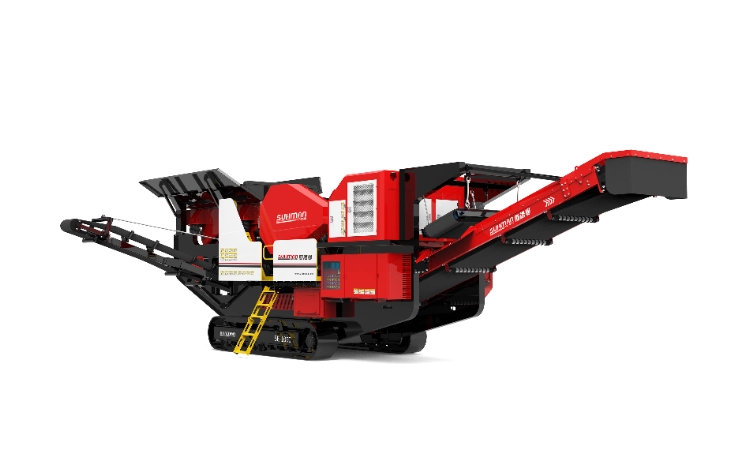



Tracked mobile jaw crushers are widely utilized as primary crushing equipment in various production scenarios. With numerous manufacturers offering products of varying quality, how can customers select a high-quality tracked mobile jaw crusher?
Trusted manufacturers prioritize using high manganese steel, which features superior hardness and abrasion resistance. High manganese steel provides robust strength and prolonged wear resistance when crushing materials. Because the prices quoted by different manufacturers vary due to factors like R&D costs and production expenses, customers should consult multiple manufacturers, compare their quotes, and carefully select equipment that provides the best value for both quality and cost.

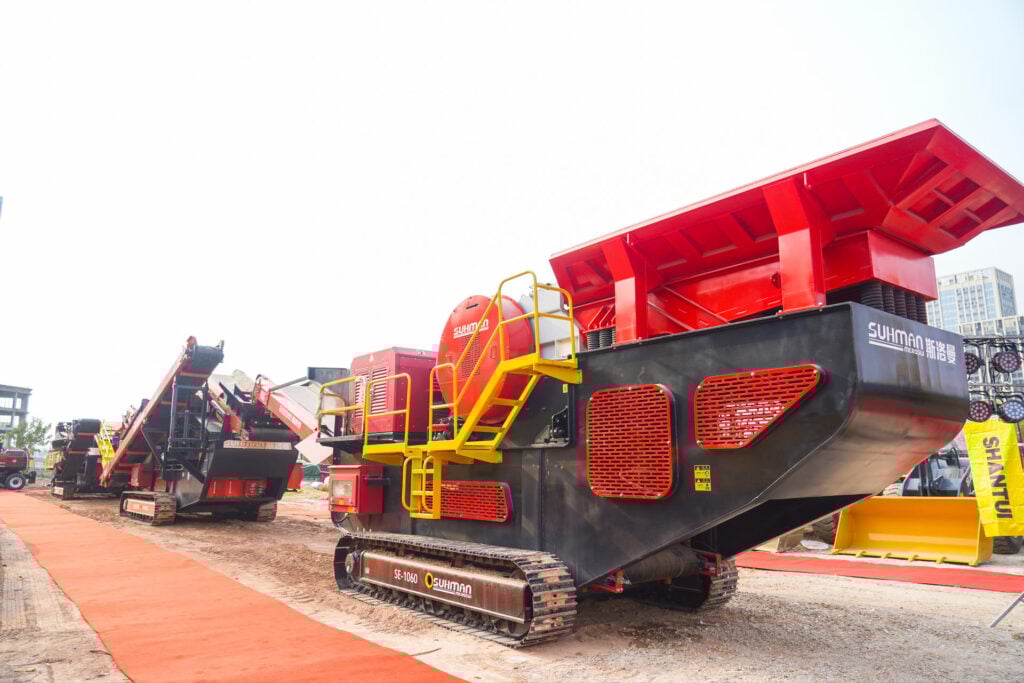
Before purchasing, customers should collect information from online sources or professional publications, and ideally visit several nearby manufacturers for onsite inspections. During these visits, assess the factory’s scale, listen to technical presentations, observe the manufacturing processes firsthand, and inquire about industry evaluations of each manufacturer. Selecting a reputable and high-quality manufacturer is crucial.
Key Considerations When Choosing a Tracked Mobile Jaw Crusher:
1. Check Technical Specifications:
Carefully examine key technical parameters like maximum feeding size and adjustable discharge opening range. These indicators determine if the crusher can meet your production requirements. For instance, if your maximum feeding size is 300mm and the required discharge size is around 45mm, a PE400×600 jaw crusher would be suitable, offering a maximum feeding size of 340mm and a discharge adjustment down to 40mm. Of course, the production capacity required by each customer will vary based on their specific situation and demands. Typically, we advise customers to share their material conditions, desired product sizes, and output needs, enabling us to provide the optimal equipment configuration. SUHMAN’s technicians are obligated to clearly explain why a particular configuration is recommended over others, ensuring customers fully understand their purchase. Additionally, the material composition, hardness, and moisture content significantly impact equipment selection—details customers may not always consider.
2. Inspect Jaw Plates Quality:
The jaw plate, a crucial component of a tracked mobile jaw crusher, significantly affects its performance. Some smaller manufacturers may offer low prices by using cheaper, lower-quality parts. SUHMAN jaw plates are made from high manganese steel alloys, which undergo cold work hardening and water quenching processes. This treatment ensures high hardness and avoids undesirable transformations during operation, ensuring prolonged durability and superior performance.
3. Check Machine Body Material:
Determine whether the crusher body is made from cast iron or cast steel. For example, when quoting a PE900×1200 tracked mobile jaw crusher to a Russia customer, they initially considered our price higher compared to another supplier. Upon investigation, we discovered that our competitor used cast iron, whereas our model used cast steel—naturally making our price higher. After further evaluation, the customer ultimately chose our product due to its superior material quality.
Types of Tracked Mobile Jaw Crushers:
1. PE Series Tracked Mobile Jaw Crusher
- Suitable for primary crushing of materials with compressive strength not exceeding 320 MPa.
- Max feed size: ≤1200mm
- Discharge size: 10-300mm
- Processing capacity: 1-500t/h
- Main motor power: 5.5-180kW
Advantages:
- Simple structure, easy maintenance
- High crushing ratio, uniform particle size
- Stable performance, low operating cost
2. European Type Tracked Mobile Jaw Crusher
- Suitable for medium and fine crushing of ores and rocks with compressive strength below 320 MPa, especially ideal for hard and corrosive materials.
- Max feed size: ≤1100mm
- Discharge range: 100-350mm
- Processing capacity: 125-450t/h
- Main motor power: 75-200kW
Advantages:
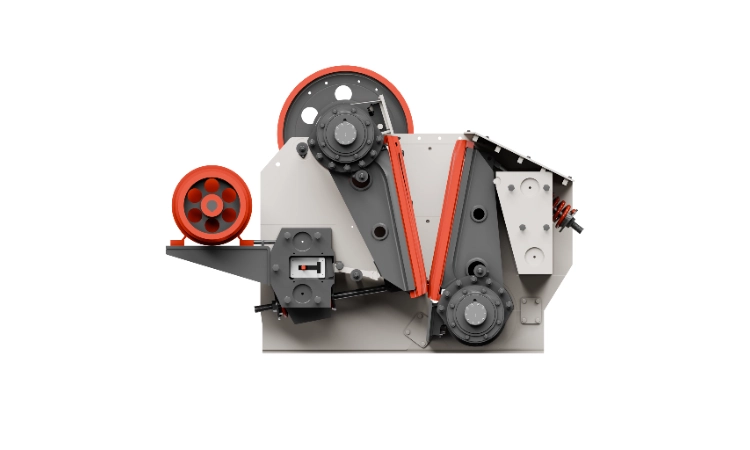
- V-shaped crushing chamber, deeper crushing cavity without dead zones, significantly enhancing efficiency
- Centralized hydraulic lubrication for convenience and efficiency, saving manpower and time
- Toothed protective plates increase the effective length of jaw plates, improving output
- Upgraded manufacturing processes and materials extend machine life and reduce overall operating costs.