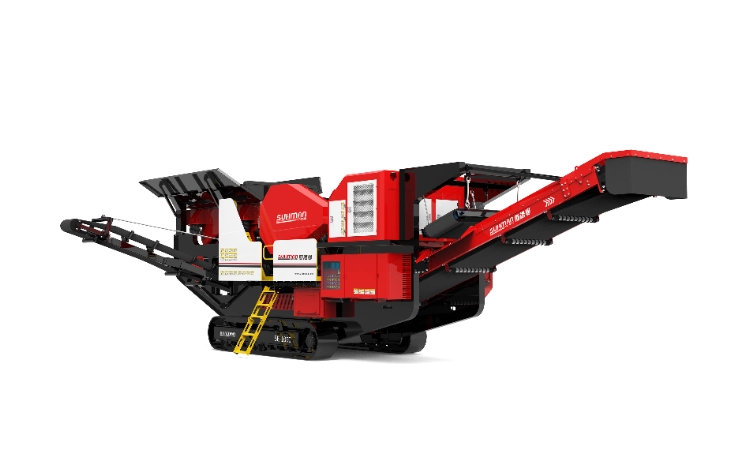



How to Install and Commission a Mobile Cone Crusher
Working Principle of a Cone Crusher
The cone crusher operates by means of an electric motor driving the eccentric sleeve through a transmission device. The moving cone performs a swinging motion under the force of the eccentric shaft sleeve. The section where the moving cone approaches the fixed cone forms the crushing cavity. Material inside the cavity is crushed through repeated compression and impact between the moving cone and the fixed cone.
Performance Advantages of Cone Crushers
- Flexible Mobility
The mobile cone crusher is highly maneuverable, making it more adaptable to rugged and challenging terrain conditions at crushing sites. It allows for quick site entry, saving significant time. The elimination of fixed steel frame structures and foundations makes site setup faster and more efficient. - Reduced Material Transportation Costs
The crusher can be deployed directly at the site, eliminating the need for material transportation. It achieves the final product size on-site. Additionally, extended mobile units can deliver crushed materials directly to specific transfer conveyors, reducing handling costs.
Custom configurations can be provided based on the type of material and production requirements, meeting the diverse needs of mobile crushing and screening. This optimizes production flow and logistics, thereby minimizing operational costs.
Installation and Commissioning of a Cone Crusher
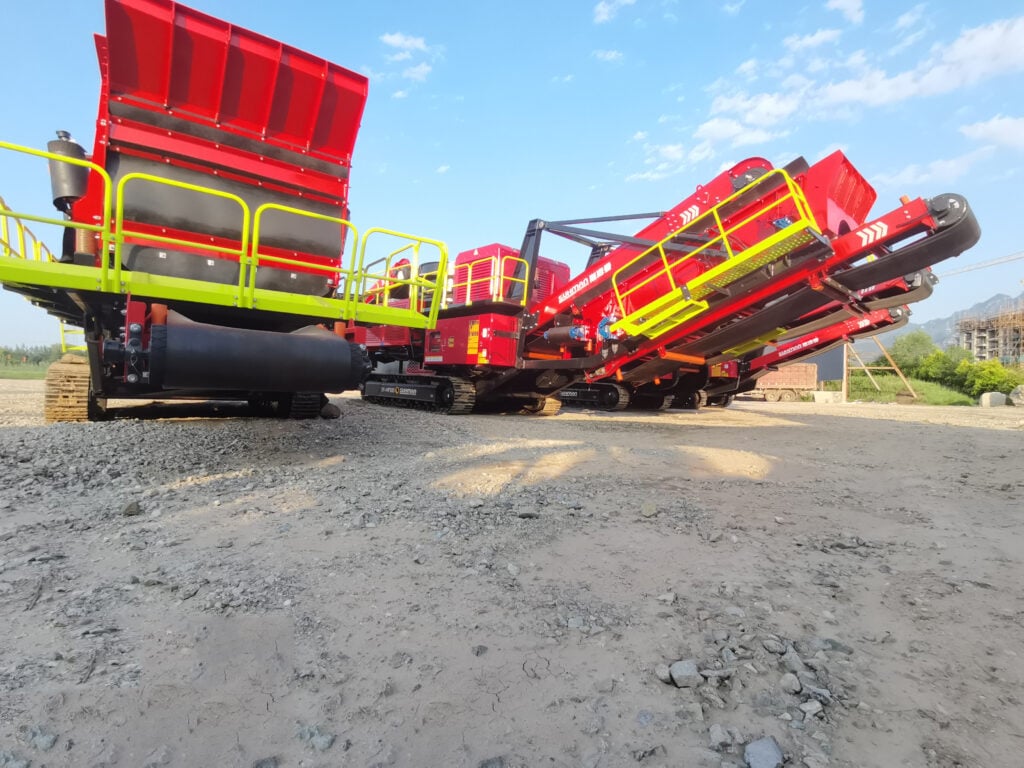
During installation, begin by placing the frame on a level foundation and calibrating the horizontal alignment. Then install the drive shaft.
Insert the eccentric sleeve from the top of the frame into the frame’s sleeve and adjust the gear backlash of the bevel gears. Next, install the spherical bearing seat, the lubrication system, and the water-seal system. Insert the assembled main shaft and moving cone, followed by installation of the support ring, adjustment ring, and spring. Finally, install the feeding device.
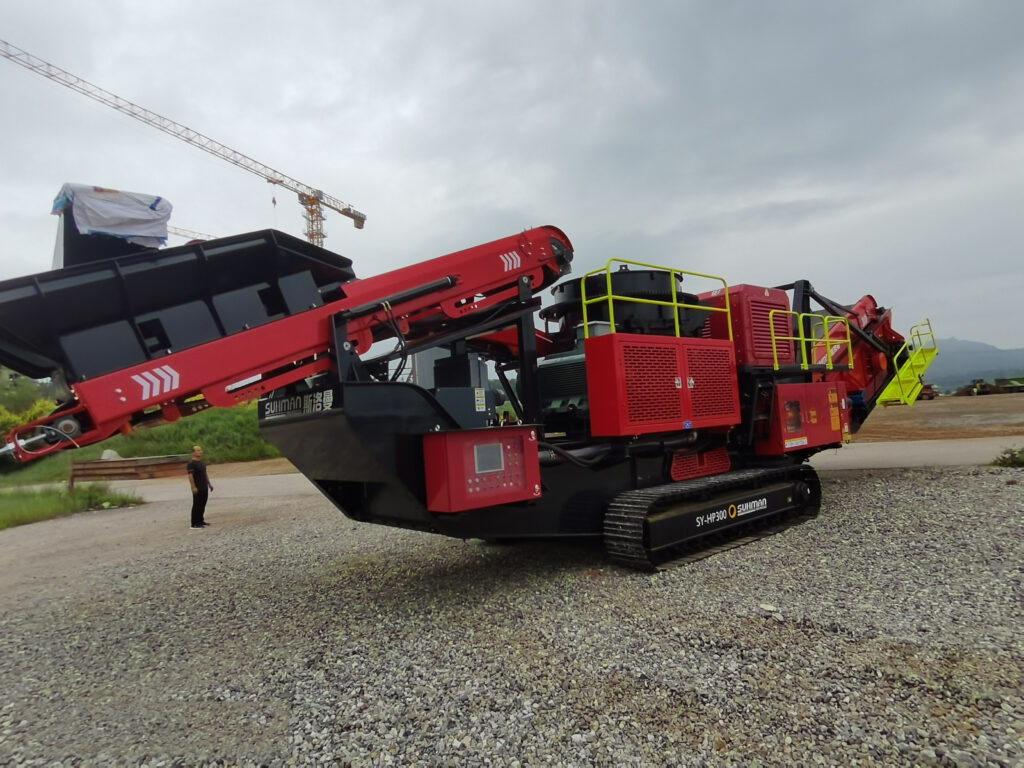
After assembly, conduct a 7–8 hour no-load test. If no issues arise, proceed to a 12–16 hour load test. During this test, the oil temperature from the oil discharge pipe should not exceed 50–60°C.
Before starting the cone crusher, perform the following checks:
- Ensure there is no ore or debris stuck inside the crushing cavity.
- Confirm that the discharge opening is set to the desired width.
- Check whether the spring safety device is functioning properly.
- Check the oil level and oil temperature in the tank (not below 20°C in winter).
- Supply water to the water-seal dustproof system and verify drainage.
Once all checks are completed and verified to be correct, follow this start-up procedure:
- Start the oil pump and check the oil pressure.
Normal oil pressure should be between 0.8–1.5 kg/cm².
Be cautious not to exceed the recommended pressure to avoid equipment failure.