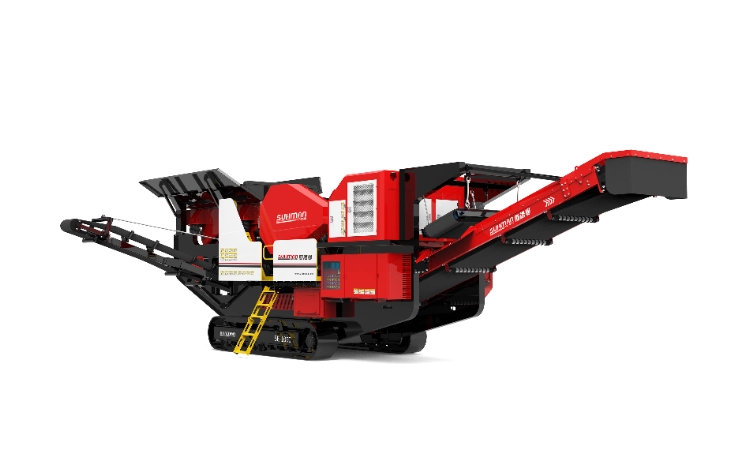



The mobile jaw crusher station is equipped with a specialized European-style crusher as its primary crushing host. This new jaw crusher is meticulously optimized in terms of structural design, material selection, manufacturing processes, and assembly, featuring a unique structure, lightweight design, reliable operation, simple handling, high crushing ratio, and high production capacity. It is ideal for crushing various hard and highly abrasive rocks and minerals.
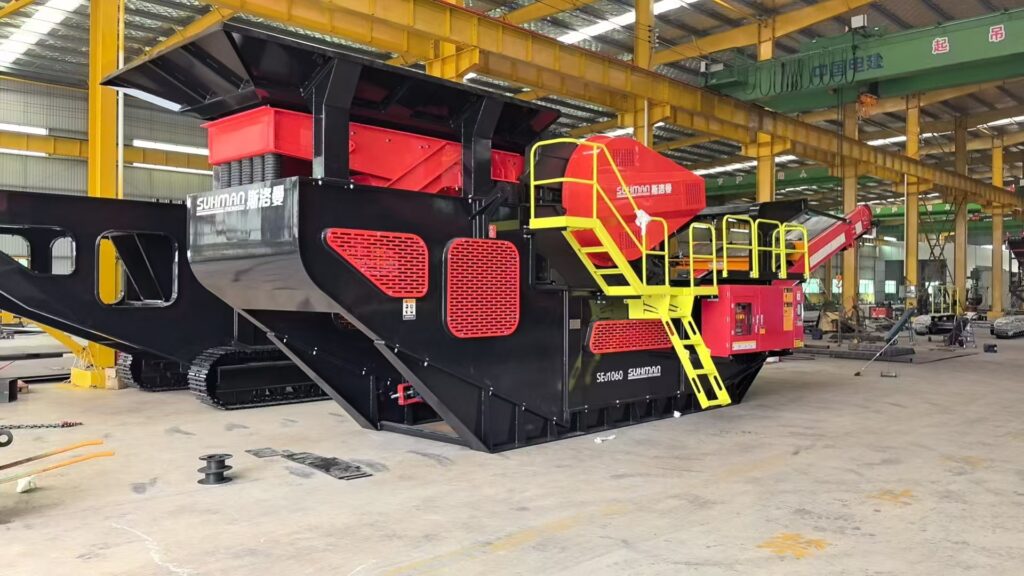

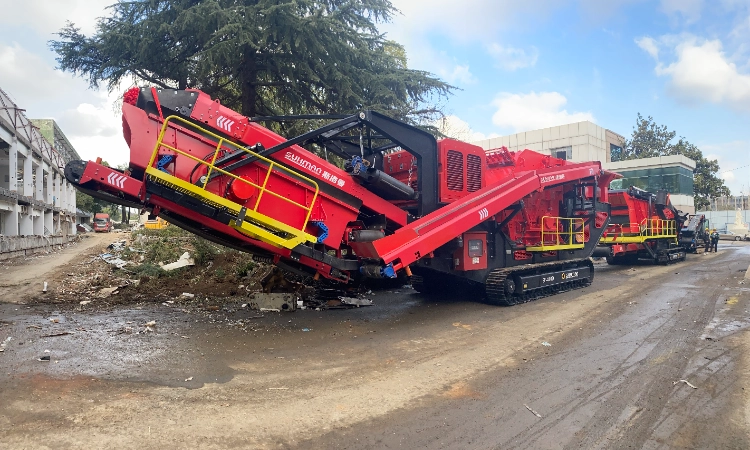
To accurately predict the crushing capacity of a mobile jaw crusher and prepare for efficient operation, you should focus on the following critical aspects:
Feeding Material
Raw materials like rocks (limestone, basalt, granite) or artificial materials like concrete and asphalt. Feeding particle sizes are typically described using size distribution or based on the average largest dimensions.
Product Size
The particle size of the crushed material, similar to feed size, is also described through size distribution or based on the average largest dimensions.
Capacity
Expressed as the throughput of the crusher, measured in tons per hour (t/h).
Feed Opening
The entry point for material into the crusher, characterized by two dimensions: width and depth. Feed opening depth is critical, as it indicates the maximum permissible feed size for each jaw crusher model.
Maximum Recommended Feed Size
According to general specifications, the recommended maximum average feed size should be approximately 80% of the feed opening depth. Adhering to this ensures optimal crushing efficiency and reduces equipment failure rates.
Nip Angle
The angle between the fixed and movable jaw plates, also known as the “bite angle.”
Jaw Plates
The primary crushing components, shaped typically like jaws, include fixed and movable plates. Depending on the model, these jaw plates can comprise one or two pieces. Different jaw plate shapes are available based on various crushing requirements.
Discharge Opening
The shortest distance between the bottoms of the fixed and movable jaw plates, measured when the plates are closest during their working cycle (also known as the closed-side setting, C.S.S).
Feed
The largest distance at the bottom between the fixed and movable jaw plates.
Predicting Crushing Capacity
The crushing capacity of the mobile jaw crusher station is influenced by multiple factors, such as feed characteristics (material type, size requirements, crushing properties, moisture content), operation style (feed efficiency, feed distribution), and discharge settings. Refer to standardized capacity tables based on practical measurements using granite with a bulk density of 1.6t/m³ (100 lb/ft³), assuming proper feed size and trouble-free operation.
Measuring the Discharge Opening
The discharge opening is a crucial parameter of the jaw crusher as it determines the crusher’s capacity and product size. It is essential to measure this accurately.
- Closed-Side Setting (C.S.S.): The shortest distance between the fixed and movable jaw plates measured during their working cycle, typically determined when the crusher is stopped.
- Open-Side Setting (O.S.S.): The longest distance between the fixed and movable jaw plates, measured directly when the mobile jaw crusher station is stopped.
There are three primary methods to measure the discharge opening:
- Distance from the fixed jaw plate’s trough (bottom) or crest (top) to the movable jaw plate’s trough (bottom) or crest (top).
- Typically measured vertically from the bottom or top of the fixed jaw plate to the corresponding position on the movable jaw plate.
Measurements must be conducted in a straight line at the bottom of the crushing cavity and away from areas subject to wear.
- Maximum discharge opening refers to the physically largest setting the crusher can accommodate.
- Minimum discharge opening (C.S.S. or O.S.S.) represents the smallest setting the crusher can operate within effectively. This minimum setting outlines the design specification and operational limits. Failure to comply with these guidelines may reduce jaw plate efficiency and shorten the equipment’s lifespan.
When crushing materials like concrete, asphalt, and bricks, the minimum discharge opening depends on the specific material type, not the jaw plate shape, which remains consistent across various mobile jaw crusher models.