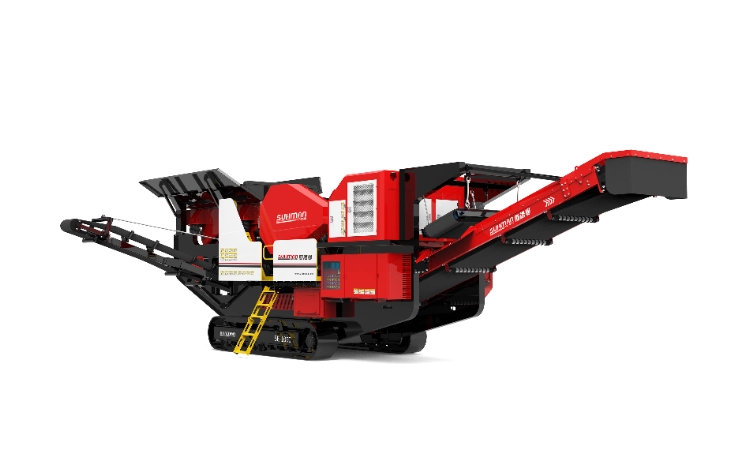



Mobile Crusher for Construction Waste Recycling How to choose a mobile crusher | High Efficiency Crushing Solutions from China Supplier
What is a Mobile Crusher?
A mobile crusher is an innovative crushing equipment that uses advanced on-board mobility technology to enable on-site operations. It integrates crushing, screening, and feeding devices into a ship-shaped steel frame to form an independent production line. It can crush construction waste into appropriate particle sizes and screen out materials of different sizes, meeting various production demands. These processed materials can be reused in other industries, effectively turning waste into resources and contributing to sustainable development.
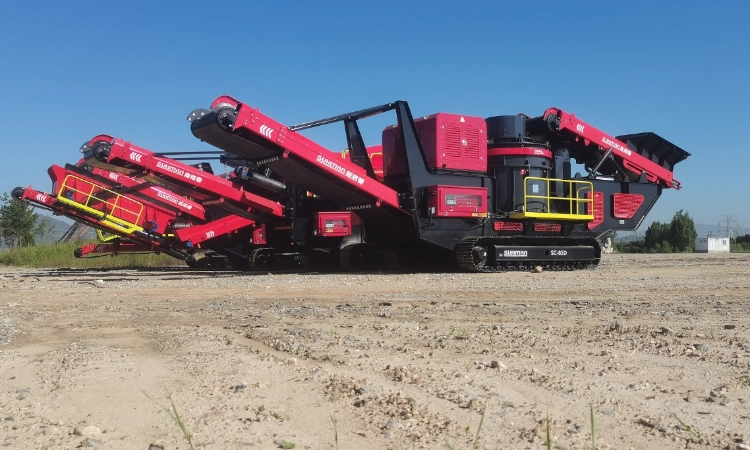
Essential Equipment for Construction Waste Recycling
Mobile crushers play a vital role in urban construction waste recycling and reuse. They can process waste materials and transform them into renewable resources. The emergence of mobile crushers not only solves the long-standing issue of urban construction waste but also promotes eco-friendly urban development. This is why mobile crushing equipment has become increasingly popular among investors and end-users in today’s market.
Advantages of Mobile Crusher in Construction Waste Recycling
1. Multiple Configurations for Broader Applications
Mobile crushers can be configured with various crushing machines such as jaw crushers, impact crushers, cone crushers, hammer crushers, and sand-making machines, depending on application requirements. In addition to processing construction waste, they are widely used for crushing ores and materials in construction, building materials, highway, railway, and bridge sectors.
2. Flexible Mobility and Strong Power
Mobile crushers feature advanced drive systems with strong power and come in tire-type and track-type variants. They adapt well to different terrains, perform strong climbing operations, and are not restricted by production sites. Equipment can be moved as site conditions change, saving time and costs on infrastructure installation and dismantling, effectively reducing production costs.
3. High Level of Intelligent Operation
A mobile crusher forms a self-contained production line with a high degree of automation. Equipped with a PLC centralized control system, it allows remote monitoring and operation, enabling real-time status tracking and production adjustment as needed.
Five Key Factors to Consider When Choosing a Mobile Crusher
Mobile crushing plants are ideal for semi-continuous open-pit mining and construction waste processing. However, many users are unsure how to choose the right equipment. Here are five key considerations:
1. Required Crushing Capacity
Crushing capacity significantly affects the choice of crusher type.
- The crusher’s throughput is influenced by the feeding system. For example, if the crusher is rated at 450 m³/h but the feeder can’t match this, the entire system’s efficiency suffers.
- The feeder’s width must accommodate the maximum feed size to prevent clogging at the hopper entry.
- The hopper volume must be sufficient to ensure continuous feeding, preventing idle times when trucks delay resupplying material.
2. Compatibility with Supporting Equipment
Before designing a mobile crushing station, it’s essential to understand the site’s existing support equipment, such as electric shovels, trucks, crawler transporters, or bulldozers.
- Mismatched equipment capacity will result in underutilization or inefficiencies.
- Transport and relocation equipment like crawler carriers must be considered during design; neglecting this can be a major design flaw.
3. Operating Environment
Mobile crushers often work in open-pit environments. In extreme cold regions (as low as -20°C to -40°C), materials must be frost-resistant.
- Earthquake zones, wind conditions, and snow loads must also be factored in to ensure the structural integrity of steel components.
4. Relocation Cycle
Mobile crushers are sometimes relocated every 3–6 months or every 1–3 years.
- Short relocation cycles: Emphasize flexible structures, often using steel bridge platforms rather than costly concrete retaining walls. Natural slopes can be used as feed hoppers.
- Longer cycles: Require robust and stable structures, often with reinforced concrete walls, suitable for long-term placement and heavy truck operations.
5. Coordination of Equipment Angles and Distances
Key equipment includes the feeder, crusher, and conveyor belt, which must be precisely coordinated.
- The distance and height between the feeder and crusher depend on material flow properties.
- A typical feeder angle of 15° is optimal for efficient material control and motor power saving.
- Angles that are too steep or too shallow may affect vertical clearance and motor load requirements.