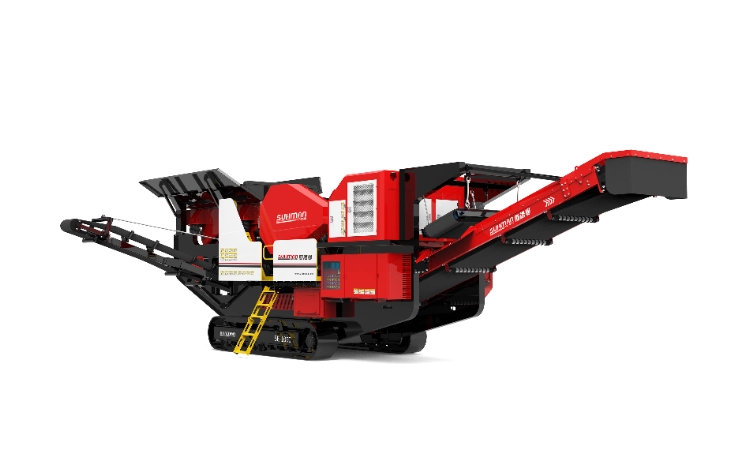



Mobile Crushing Plants: How to Select a Mobile Crushing & Screening Line for Hard Rock and Concrete Recycling
Mobile crushing plants are chosen for one reason: fast production with lower civil work and flexible relocation. But “mobile” is not a single machine—it’s a system made of feeding, crushing, screening, conveying, and (often) recirculation. The right configuration depends on your rock hardness, feed size, required capacity (80–450 TPH), and target product gradations.
This guide explains the main types of mobile plants, typical process flows (jaw→cone/impact→screen), a practical selection table, cost drivers, lead time, and proven setups for granite, basalt, and concrete recycling.
1) Mobile Crushing Plant Types
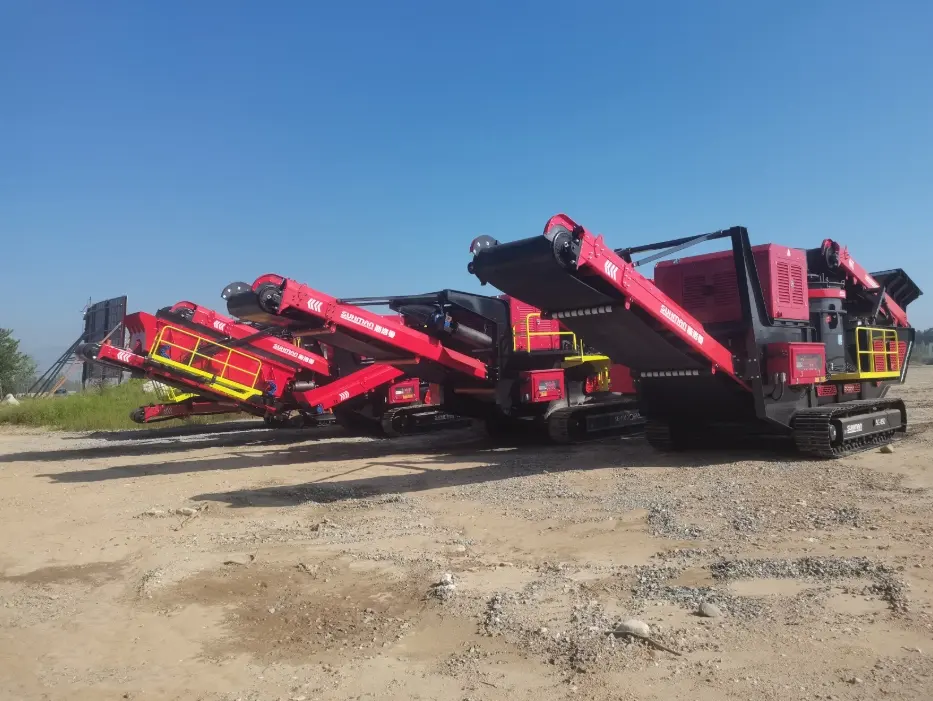
1.1 Tracked (Crawler) Mobile Plants
Best for:
- Quarries with short hauling distance or frequent face moves
- Uneven ground, soft soil, narrow working areas
- Projects that relocate weekly/monthly
Key advantages:
- Strong mobility and site adaptability
- Usually higher stability under vibration loads
- Easy “move-and-crush” operation
Trade-offs:
- Typically higher equipment cost
- Transport logistics may require low-bed trailers
1.2 Wheeled Mobile Plants
Best for:
- Long-distance relocation between job sites
- Road-friendly transfer (depending on local transport rules)
- Contractors serving multiple cities/regions
Key advantages:
- Faster highway transport
- Often lower initial cost than tracked systems
Trade-offs:
- Needs more site leveling than tracked plants
- Less flexible on rough terrain
2) Process Flows That Buyers Actually Use
2.1 Hard Rock (Granite / Basalt) — Most Common Flow
Vibrating feeder (with pre-screen) → Mobile jaw crusher → Mobile cone crusher → Screening plant → Stockpiles
Why:
- Jaw handles large feed and high compression load
- Cone produces stable, well-shaped aggregates in hard rock
- Screening controls final sizes and reduces waste
2.2 High Reduction / Cubical Shape — Impact-Assisted Flow
Feeder → Jaw (optional) → Impact crusher → Screen → (Optional recirculation)
Why:
- Impact can improve shape for some applications
- Better for certain limestone or softer rock scenarios
Note: for very abrasive granite/basalt, operating cost may rise (wear parts).
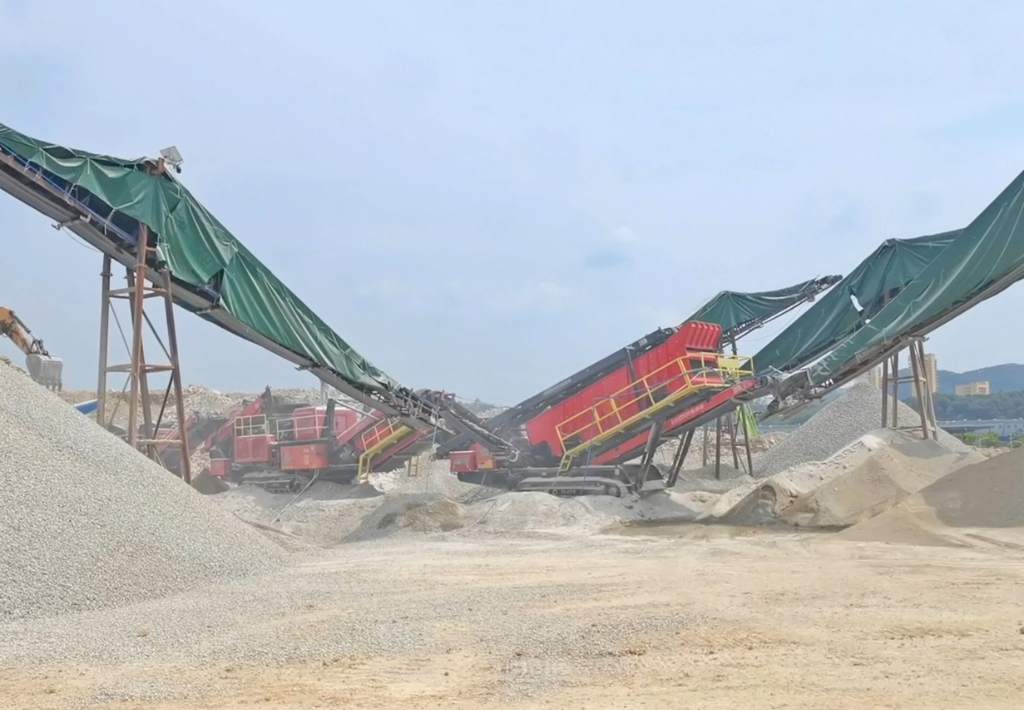
2.3 Concrete Recycling — Closed-Circuit Recycling Flow
Feeder → Jaw/Impact → Magnetic separator → Screen → Recirculation conveyor → Final products
Why:
- Magnetic separator removes rebar, protects belts and improves product cleanliness
- Closed-circuit keeps oversize returning, stabilizing gradation
3) A Practical Selection Table (80–450 TPH)
Use this as a quick “first filter” before you request a formal quotation:
| Your Condition | Recommended Core | Screening | Notes |
|---|---|---|---|
| Hard rock (granite/basalt), feed ≤ 600 mm, 150–350 TPH | Jaw + Cone | 2–3 deck screen | Most stable, lowest risk |
| Hard rock, higher output + multiple products, 250–450 TPH | Jaw + Cone (bigger chamber) + Screen | Larger screen area | Plan stockpile layout early |
| Concrete with rebar, mixed feed | Jaw or Impact + Magnet + Screen (closed circuit) | 2–3 deck | Add recirculation conveyor |
| Primarily screening / scalping | — | Mobile screen (scalper or finishing) | Choose screen type carefully |
| Need frequent relocation on rough ground | Tracked | Tracked | Mobility priority |
| Mainly highway transfer | Wheeled | Wheeled | Lower transport friction |
4) Key Parameters That Decide Whether It Works
4.1 Feed Size and Material Hardness
- Max feed size decides jaw inlet and feeder strength
- Hardness/abrasion decides whether cone is more economical than impact
4.2 Target Products and Screen Deck Design
If you want multiple products (example):
- 0–5 mm (sand/fines)
- 5–10 mm
- 10–20 mm
- 20–31.5 mm
Then screen deck count, mesh size, and screen area must match the real tonnage, otherwise you’ll get:
- unstable gradation
- high recirculation load
- low effective capacity
4.3 Closed-Circuit vs Open-Circuit
- Closed-circuit = better control, higher consistency, typically higher belt/conveyor complexity
- Open-circuit = simpler and cheaper, but product control is weaker
4.4 Power, Fuel, and Wear Cost
Buyers often compare only “TPH”. The better KPI is:
Cost per ton = fuel + wear parts + labor + downtime risk.
For granite/basalt projects, the wrong crusher choice can double wear cost even if TPH looks similar.
5) Typical Configurations Buyers Request (Ready to Quote)
Option A — “Safe Choice” Hard Rock Line (200–350 TPH)
- Tracked feeder with pre-screen
- Tracked jaw crusher
- Tracked cone crusher
- 3-deck finishing screen
- Recirculation conveyor (optional based on product spec)
Option B — 250 TPH Granite/Basalt Mobile Jaw Crushing & Screening Line
- High-capacity feeder + grizzly
- Mobile jaw crusher (primary)
- 3-deck screen (final sizing)
- Return conveyor (if strict sizing required)
Why it sells: - Fast commissioning
- Strong mobility
- Easy to scale by adding a cone stage later
Option C — Concrete Recycling Line (On-Site)
- Heavy-duty feeder
- Jaw/impact crusher (depends on rebar level and desired shape)
- Magnetic separator
- Screen + return belt
- Water spray / dust control options
Internal link ideas on your site:
- “Mobile jaw crusher” product page
- “Mobile cone crusher” product page
- “Mobile screening plant / horizontal screen” page
- “Recycling solution” page
6) Cost Drivers and Lead Time (What Buyers Ask First)
What affects the price most
- Tracked vs wheeled chassis
- Crusher chamber size / motor power
- Screen area + number of decks
- Recirculation conveyor and magnet system
- Automation level (remote control, sensors, load control)
Typical lead time & commissioning
- Manufacturing lead time is often weeks, depending on configuration and stock
- On-site installation/commissioning can be days when foundations are not required
(Your sales页里可以把“delivery window + commissioning steps”写得更具体,会显著提升询盘质量。)
7) Real-World Use Scenarios (How to Position for Buyers)
Quarry / Mining
- Focus on stability, uptime, wear cost per ton
- Show recommended flow sheet for granite/basalt
Contractor / Infrastructure Projects
- Focus on mobility, fast setup, multi-product output
- Highlight “no heavy civil work” and “fast relocation”
Recycling / Urban Jobsites
- Focus on magnet, closed-circuit control, dust/noise options
- Emphasize clean aggregates and compliance requirements
FAQ (10)
- What capacity range can a mobile crushing plant cover?
Most configurations are selected to match typical demand like 80–450 TPH, depending on feed size, rock hardness, and process flow. - Tracked vs wheeled—how do I choose?
Choose tracked for rough terrain and frequent face moves; choose wheeled for easier long-distance transport between sites. - Do I need a cone crusher for granite and basalt?
In many hard-rock projects, jaw + cone is the most stable and economical long-term choice due to wear cost control. - What is a closed-circuit crushing system?
A closed-circuit system recirculates oversize material back to the crusher to stabilize product size and reduce waste. - How many screen decks do I need?
If you need multiple final sizes, a 2–3 deck screen is common. The right deck count depends on product gradations and throughput. - Can a mobile plant produce multiple aggregate sizes at once?
Yes—by using a multi-deck screen and proper conveyor/stockpile layout to separate fractions. - How do I reduce wear cost in abrasive rock?
Use correct crusher type, keep stable feed, add pre-screening, and avoid excessive recirculation load. - What setup is best for concrete recycling with rebar?
Use a magnet system (overband magnet) plus closed-circuit screening to remove metal and control final size. - What information should I provide to get an accurate quotation?
Material type, max feed size, target TPH, required products (sizes), mobility preference (tracked/wheeled), and site constraints. - How fast can a mobile plant be commissioned on site?
With proper preparation and a modular design, commissioning is typically measured in days rather than weeks.