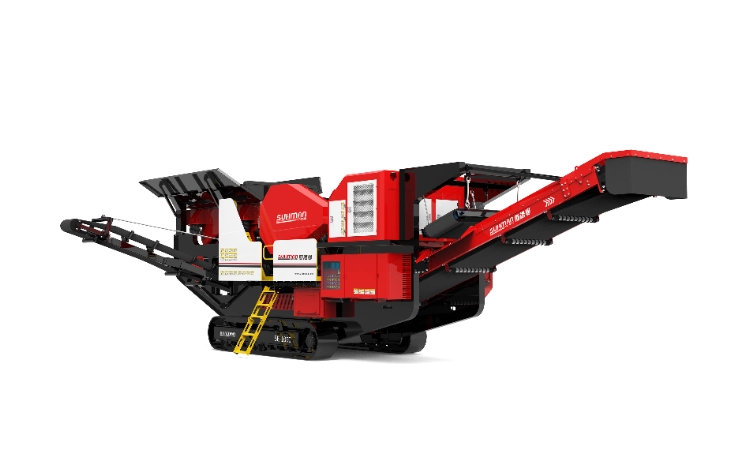



Crushers are critical frontline equipment in industrial crushing operations, playing a pivotal role in production lines. With growing demand for crushers, the number of manufacturers has surged, making the selection process increasingly complex. This guide outlines key considerations for choosing the right crusher and manufacturer, ensuring optimal performance and economic benefits.
Types of Crushers and Their Applications
Crushers are classified based on their structure and working principles, including jaw crushers, impact crushers, hammer crushers, roller crushers, and cone crushers. These machines are designed to crush various types of stone materials.
- Jaw Crusher
- Features: High crushing ratio, uniform output size, simple structure, reliable performance, easy maintenance, and cost-effective operation.
- Applications: Ideal for coarse and medium crushing of hard and medium-hard rocks, handling materials with compressive strength up to 320 MPa.
- Cone Crusher
- Features: High crushing ratio, efficient operation, and uniform particle size.
- Applications: Suitable for medium and fine crushing of medium-hard rocks.
- Impact Crusher
- Features: Capable of processing materials with side lengths of 100–500 mm and compressive strength up to 350 MPa. Produces cubic, uniform particles with a high crushing ratio.
- Applications: Widely used in highway construction for stone crushing.
- Hammer Crusher
- Features: Designed for brittle materials with compressive strength below 100 MPa and moisture content under 15%.
- Applications: Commonly used for crushing minerals and fragile materials.
Factors to Consider When Choosing a Crusher
Selecting the right crusher requires careful evaluation of the material type, hardness, input/output particle size, production capacity, and site conditions.
- Material Hardness
- Harder materials require higher crushing capabilities. For hard or medium-hard stones, jaw crushers are preferred for primary crushing. For medium-hard or softer materials, cone, impact, or hammer crushers can be used directly.
- Material Size
- Large-sized materials require jaw crushers for primary crushing. For smaller materials needing specific gradations, a combination of crushers (e.g., jaw crusher paired with cone, impact, or hammer crushers) and screening equipment is necessary.
- Material Moisture Content
- High moisture content can cause fine particles to clump or stick to coarser materials, increasing viscosity and reducing discharge efficiency. Excessive moisture may clog the discharge port, disrupting production.
- Cleavage Properties of Ore
- Ores with well-developed cleavage fracture easily along cleavage planes, boosting crusher productivity. In contrast, densely structured ores reduce productivity due to their resistance to breaking.
- Input and Output Particle Size
- The crushing ratio (ratio of input to output particle size) affects productivity. Higher coarse particle content or a larger input-to-feed-port ratio demands a higher crushing ratio, reducing productivity. Conversely, finer input materials or smaller input-to-feed-port ratios require a lower crushing ratio, increasing productivity.
- Large input sizes with small output requirements often necessitate secondary or multi-stage crushing, while smaller input sizes may require only single-stage crushing.
- Production Capacity
- Higher output demands require larger crusher models, increasing both investment and operational costs. Capacity is a key determinant of equipment size and specifications.
- Site Conditions
- The physical layout of the site, including its size and equipment placement, directly influences crusher selection. Ensure the chosen equipment fits the site’s spatial and logistical constraints.
Factors to Consider When Choosing a Manufacturer
Selecting a reliable manufacturer is critical to ensuring equipment quality and long-term economic benefits. Key factors include:
- Comprehensive Strength
- Evaluate the manufacturer’s production scale, financial stability, and whether they have dedicated R&D and quality control teams. Strong manufacturers often invest in advanced processing technologies and equipment.
- Equipment Quality
- High-quality crushers offer stable, reliable performance, high operational efficiency, low failure rates, and extended service life. Quality directly impacts production reliability and maintenance costs.
- On-Site Evaluation
- Visit the manufacturer’s facility to assess the production environment, workshop scale, equipment craftsmanship, and supporting infrastructure. Request a trial run to observe equipment performance and operational stability.
- After-Sales Service
- Customer Follow-Up: Reliable manufacturers conduct regular follow-ups to monitor equipment performance, production capacity, wear part conditions, and address customer issues.
- Spare Parts Supply: Choose manufacturers with robust spare parts systems to ensure timely replacements, minimizing downtime during repairs.
Key Considerations
When selecting a crusher and manufacturer, prioritize production requirements and material properties. A reputable manufacturer ensures high-quality equipment, reliable performance, and comprehensive support. Avoid choosing solely based on low cost, as this may compromise quality and long-term efficiency.
By carefully evaluating both equipment and manufacturer, you can optimize your crushing operations, enhance productivity, and maximize economic returns.
Equipment use scenarios
Municipal: road renovation, building concrete, filling materials;
Engineering: railways, highways, water conservancy, special projects;
Quarry: quantitative crushing of follow-up projects and special projects;
Mining: surface mines, natural sand and gravel;
Demolition: professional demolition, on-site crushing by blasting companies;
Construction waste recycling: tailings, waste slag, recycling;