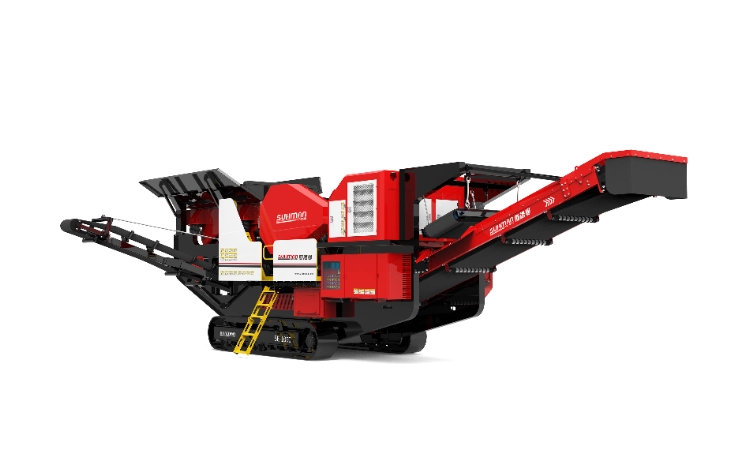



Should I choose jaw crusher or impact crusher for limestone crushing? 3 production line solutions
In previous issues, we introduced various aspects of metal ore beneficiation. Today, based on the material characteristics of limestone (medium to low hardness, brittle texture) and typical production requirements, we’ll explore three recommended production line configurations and equipment selection strategies for processing ordinary limestone from mountain sources.
🛠 Limestone Crusher Selection Guide
1. Jaw Crusher (Primary Crushing)
- Application: Initial stage of crushing, suitable for handling large raw limestone chunks (up to 1500mm feed size).
- Advantages:
- Simple structure, large capacity
- Low maintenance costs
- Ideal for high-throughput operations
- Note: The output size is relatively coarse (typically 150–300mm), requiring secondary crushing for finer results.
2. Impact Crusher (Secondary / Fine Crushing)
- Application: Secondary stage to further reduce the size of limestone from primary crushing to around 20–50mm.
- Advantages:
- Excellent particle shape (more cubical, ideal for construction aggregates)
- High crushing ratio (up to 40:1)
- Adjustable discharge size via gap control between rotor and impact plate
- Note: Not suitable for very hard rocks; hammer wear parts require regular replacement.
3. VSI Crusher (Sand Making / Shaping)
- Application: Tertiary crushing for producing fine aggregates or manufactured sand (0–5mm).
- Advantages:
- Superior grain shape and gradation
- Combines shaping and crushing functions for higher product value
- Note: Higher equipment investment; best suited for lines requiring sand production.
🏗 Production Line Configuration Options
Option 1: Basic Aggregate Production Line (No Sand Required)
- Process Flow:
- Jaw Crusher → Impact Crusher → Vibrating Screen → Finished Product Storage
- Use Case:
- Ideal for projects producing coarse aggregates (10–30mm, 20–50mm) without the need for fine sand.
- Highlights:
- Lower overall cost, simple equipment setup
- Impact crusher ensures good aggregate shape, meeting construction standards
Option 2: Combined Sand and Aggregate Production Line
- Process Flow:
- Jaw Crusher → Impact Crusher → VSI Crusher → Vibrating Screen (with Return System) → Finished Product Storage
- Use Case:
- Suitable for sites requiring both aggregates and manufactured sand (e.g. 0–5mm), such as concrete plants and high-spec construction projects.
- Highlights:
- VSI crusher enhances sand quality and gradation control
- Return system increases material utilization and reduces waste
Option 3: High-Capacity Optimized Production Line (1000 TPH Scale)
- Sample Setup:
- Large Jaw Crusher → Multiple Impact Crushers (parallel) → VSI Crusher → Multi-layer Vibrating Screens
- Use Case:
- For large-scale limestone plants needing both high throughput and product diversity
- Highlights:
- Parallel machines increase capacity and reduce single-unit load
- Higher capital investment (ranging from several million RMB), but offers long-term returns
🔧 Key Configuration Considerations
1. Screening and Recirculation System
- Vibrating screens should be designed with multiple layers based on required product sizes (e.g. 5mm, 10mm, 20mm).
- Undersized material is returned to crushers via belt conveyors to form a closed-loop process.
2. Environmental Protection & Automation
- Dust suppression systems (e.g. pulse baghouse collectors) help control airborne particles.
- PLC-based automation minimizes manual intervention and improves operational efficiency.
3. Budgeting & Maintenance
- Basic aggregate lines are more budget-friendly (in the range of millions of RMB).
- Lines with VSI sand makers have higher costs due to equipment investment.
- Regular maintenance of vulnerable parts like blow bars and jaw plates extends service life and reduces downtime.
These are the most common configurations and equipment selections for limestone crushing plants. The final setup should be based on your desired capacity, output specifications, and budget. If you have specific questions or need a tailored solution, feel free to contact our technical team for detailed consultation!