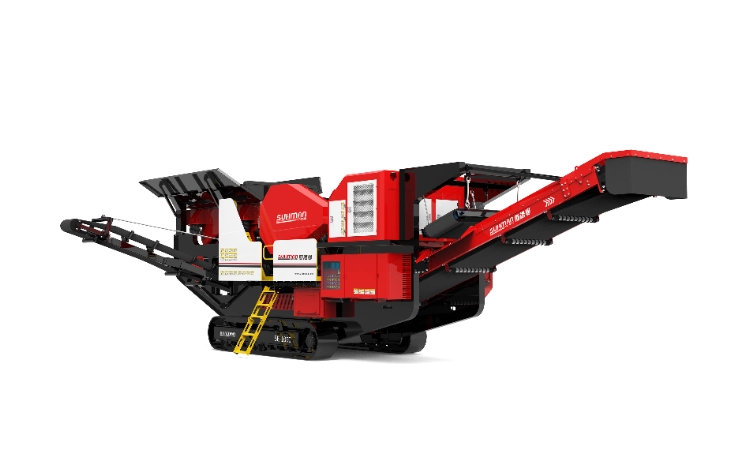



Track-Mounted vs Wheeled Mobile Crushing Plants: When Each Makes Sense (Cost, Mobility, Setup Time)
Two plants can both be labeled “mobile crushing plant,” but track-mounted and wheeled systems behave very differently in real production. The wrong choice often leads to:
- Higher transport and relocation cost
- Lost time during site changes
- Higher fuel usage (or unnecessary power constraints)
- Layout limitations that reduce output stability
Here’s a practical decision framework.
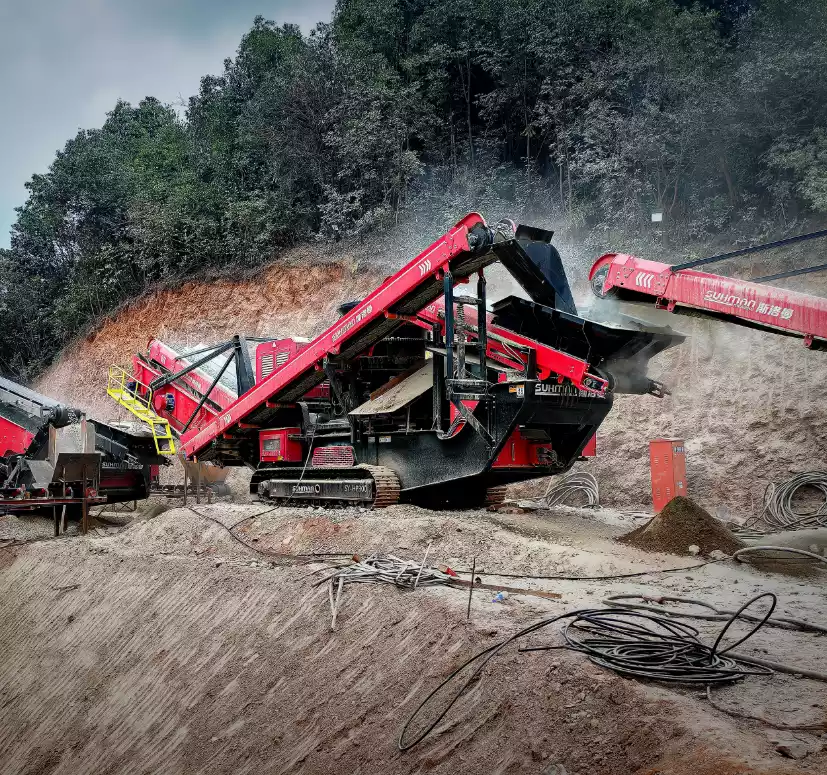

1) Track-Mounted Mobile Crushing Plants (Tracked)
Best for: frequent relocation + rough terrain
Typical buyers: contractors, quarry bench-to-bench moves, recycling projects, remote sites.
Advantages
- Best mobility on-site (moves like heavy equipment)
- Works well on uneven ground / soft soil / quarry benches
- Fast relocation inside the jobsite (no towing required)
- Often preferred for hard rock face operations and short-term projects
Trade-offs
- Higher upfront cost vs wheeled (commonly)
- Fuel consumption can be higher if you move the unit often under its own power
- Long-distance transport still needs lowbed trailers
2) Wheeled Mobile Crushing Plants (Wheeled)
Best for: stable sites + road transport efficiency
Typical buyers: long-term quarries, fixed project yards, sites with good access roads.
Advantages
- Easier and sometimes cheaper long-distance transport
- Often lower purchase cost in comparable capacity setups
- Works well when the plant stays in one layout for weeks/months
Trade-offs
- Needs better ground condition and prepared pads for best performance
- Usually slower to reposition inside rough quarry terrain
- May require more planning for ramps/leveling and towing logistics
3) Setup Time: What Really Saves Hours
Tracked
- Faster “internal relocation” (bench changes, moving closer to the face)
- Less dependence on towing vehicles inside the site
- Often quicker to get back into production after repositioning
Wheeled
- Very efficient if you’re mainly doing site-to-site moves on good roads
- But inside the site, you may spend more time on towing, leveling, and layout
Rule of thumb:
If you relocate within the same site frequently, tracked wins.
If you move between sites on roads and keep a stable layout, wheeled can win.
4) Cost Comparison: Capex vs Opex
Capex (purchase)
- Wheeled can be lower in some configurations
- Tracked often costs more due to undercarriage and mobility design
Opex (operating)
Tracked may reduce hidden costs:
- Less downtime during repositioning
- Less need for extra towing logistics
- Better ability to maintain stable feed near the face (which protects throughput)
Wheeled may reduce costs when:
- Road transport is frequent and straightforward
- The plant stays in one place long enough to justify pad preparation
5) Best Application Match (Quick Decision Table)
Choose Track-Mounted if you:
- Work in quarries with changing benches
- Need to move the plant closer to the excavator frequently
- Operate on uneven ground or harsh terrain
- Want fastest on-site repositioning
Choose Wheeled if you:
- Have stable ground and prepared pads
- Move between sites on roads and keep long production runs
- Want simpler long-distance transport logistics
6) Common Configurations (Tracked or Wheeled)
- Jaw + Screen: base course, recycling, simple aggregate
- Jaw + Cone + Screen (closed circuit): premium aggregate, better shape, multi-grade output
- Add-ons: pre-screening, magnetic separation (rebar removal), dust suppression depending on application
FAQ (10)
- Is tracked always better for quarries?
Not always. If your quarry layout is stable and pads are prepared, wheeled can be efficient. - Which one has faster setup time?
Tracked is usually faster for internal moves; wheeled can be efficient for road moves between sites. - Which has lower operating cost?
Depends on relocation frequency, fuel price, and downtime cost. Production stability often matters more than fuel alone. - Can wheeled plants work on rough ground?
They can, but performance improves significantly with good site preparation and access. - Do I need closed circuit for both types?
Closed circuit is a process choice, not a chassis choice—recommended when grading consistency matters. - Which is better for granite/basalt?
Both can work. Hard rock performance depends more on crusher selection and wear design than track vs wheel. - What if I need to relocate every week?
Tracked is usually safer and faster inside jobsite operations. - What if I move between cities often?
Wheeled can be attractive if road transport is a priority and site ground is good. - Does tracked mean higher maintenance?
Undercarriage wear exists, but good operating practices and correct track selection control the cost. - Can I start with jaw + screen and upgrade later?
Yes—many lines scale by adding a cone stage and converting to closed circuit.
CTA (for inquiries)
Tell us your site type (quarry/contract/recycling), relocation frequency, material, feed size, target output sizes, and capacity—we’ll recommend tracked vs wheeled and provide a factory quotation.