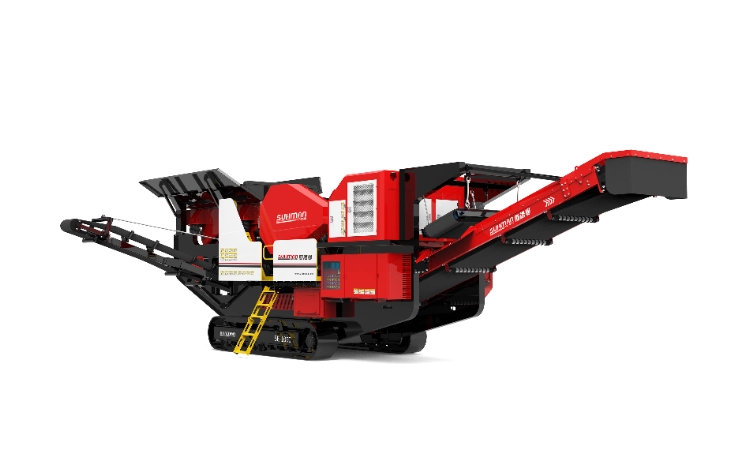



What issues should be considered when purchasing mobile screening station equipment?
In a crushing and sand-making production line, the main production equipment not only includes the mobile crushing station, but also requires a mobile screening station to classify the sand and gravel products to meet gradation requirements. Moreover, the final screening performance also affects the product’s value and application. When setting up a sand production line, selecting the right mobile screening equipment is crucial. However, many users are unsure how to choose the appropriate mobile screening station to meet their production needs. Today, we’ve summarized the key factors to consider when purchasing a mobile screening station. Let’s take a look:


1. Consider the Feeding Material
In a sand-making production line, different types of stone materials vary in particle size, moisture content, and clay content. For example, if the material size is close to the screen aperture size, screening efficiency will decrease. Therefore, screening equipment must be selected according to the characteristics of the stone material being processed.
2. Consider the Product Gradation
Product gradation is another important factor in selecting mobile screening equipment. For instance, if the manufactured sand consists of four different particle size grades, a modern mobile screening station with a triple-layer screen is recommended. On the other hand, if the product has only a single particle size and gradation is not required, a vibrating screen integrated into the mobile crushing station may be sufficient without the need for additional equipment.
3. Consider the Production Capacity
While meeting both the input and output requirements, the mobile screening station must also match the production capacity of the line. Different manufacturers offer mobile screening stations in various models and specifications, with varying throughput capacities. Therefore, selection should be based on the designed capacity of the production line. Since the characteristics of the stone material also affect the actual processing capacity, screening efficiency should be taken into account, and equipment with a higher theoretical capacity should be considered. Additionally, attention should be paid to the screening accuracy and mesh specifications of the vibrating screen.
4. Consider the Production Requirements
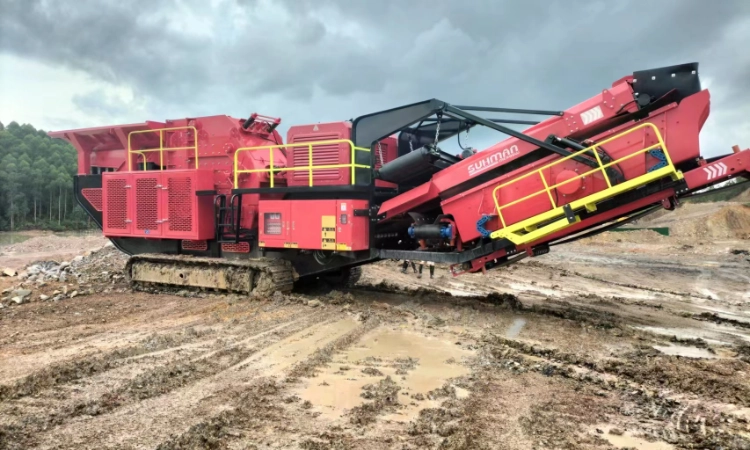
Production requirements should be evaluated based on the screening purpose when selecting a mobile screening station. For example, if the raw material has a high clay content, the screening process must serve to remove clay and purify the manufactured sand. In such cases, it’s advisable to consult with the equipment manufacturer for tailored recommendations. Technical teams may even offer customized designs to meet specific needs. Furthermore, if the production line is expected to process multiple types of stone—such as in rental applications—then the adaptability of the screening station to different working conditions must be considered. It is best to choose equipment with easily replaceable screen meshes and adjustable screen box angles. For instance, the ZJZ-893 crawler-type heavy-duty mobile screening station from Aibes features a dual-layer screen and an adjustable screen box angle ranging from 14 to 20 degrees, with a capacity of up to 800 t/h, enabling efficient screening.
As a modern production device, the mobile screening station brings significant convenience to sand-making and similar operations. When selecting mobile screening equipment, focusing on the four aspects outlined above can help you choose a model that fits your production line and ensures efficient operation.